I didn’t find my feminine language for wellness in a workout plan or a meal plan. I found it in my own résumé.
Hey, Midlife Woman! What does your résumé look like? Yeah, mine, too.
Here’s what mine looks like (in no particular order):
- Food server
- Caterer/private chef
- Nutrition Care Representative (Hey—that sounds sexy, right? Um, yeah. They probably paid a consultant a LOT of money to come up with a sexy word for “phone operator in a hospital call center helping patients to order their meals.” Because you know, nobody would apply for a job called “phone operator.” And it does give me benefits….)
- Mandarin Chinese instructor
- Office administrator (church, university, nonprofit)
- Health coach
My mom is still hung up on, “Why in the world did you get an MA in Chinese if you weren’t going to use it?
Well, I actually do use it in my coaching work all the time….
A Shift in Perspective
For so many of us, there are two ways to look at our work lives:
This woman is completely unemployable! What has she been doing all her life? Why has she moved from this to that, and why are there gaps in there?
Goddess—look at all she’s done! This woman could literally do anything she’s asked.
When I had been in the health coaching industry for five years, I might have thought about it the first way. Twelve years in, I definitely think about it the second way.
Everything I’ve done suddenly coalesced into something that made total sense:
Obviously, my work in food is vital in speaking to clients about nutrition, cooking, and meal planning.
My administrative work totally set me up for being the CEO of my own practice. As Chief Everything Officer, I really do it all, from coaching to all the back end tasks.
More importantly, my nonprofit work grounded me solidly in aligning my business with my values—making sure that health coaching is accessible to and affordable for Every Body.
And the language instruction? Well, that’s a longer answer.
A Language Large Enough
Linguists, philosophers, and sociologists have written a lot about how language not only reflects our world: it also has the power to shape it.
If we spoke a different language, we would perceive a somewhat different world.
~Ludwig Wittgenstein
So it stands to reason that if you can learn to speak a new language around wellness, you can affect your wellness.
Consider how often we use hyper-masculine-energy imagery when we think about the practices “required” to be healthy: we are at war with our weight, battle our impulses, conquer our cravings, and generally try to motivate ourselves to control/manage our way to health.
What if we were to learn a new language around health and wellness—a softer, more nurturing, feminine-energy-led one?
In my experience, when we approach wellness using this new language, it no longer feels like a daily battle in a longer war.
I’m not saying we need to remove the masculine or find a balance between the masculine and feminine energy languages: “balance” is a static state. We aim to achieve it then fight to keep it—again, so masculine!
Instead, I’m suggesting we seek out harmony, which is much more fluid and feminine. When there is harmony, there is a constant flow between two polarities, one that can only happen when we make our language (and our reality) large enough to encompass all possibilities.
Bringing Chinese (Language and Philosophy) into the Conversation
What does that new, more feminine language sound like?
Consider the difference between masculine and feminine energy through the lens of the Taoist concept of yin-yang. According to this principle, we all contain both types of energy within us, and we are constantly allowing one to come forward and the other to retreat.
Sometimes we lead with our masculine energy, sometimes with our feminine. Neither one is “right” or “wrong”—it just exists in relation to and in ratio with the other. (For a great book on this idea, check out LiYana Silver’s Feminine Genius.)
I’m going to generalize here, and I think you’ll agree that it’s a valid generalization:
Masculine energy moves in a straight line, like an arrow. It pushes obstacles away. It’s a set the goal and go for it, go out and conquer, protect and defend energy.
Feminine energy moves like a slinky. It flows around obstacles in its path. It’s about aligning ourselves with our values rather than going for a goal, nurturing, tending and mending energy.
If you feel like you are often exhausted, consider whether you tend to lead with your masculine energy: you try to play by the rules of the boys’ sandbox because—let’s face it—we live in a world built by and for and for the benefit of men.
The very idea of “success” has been defined (predominantly by men!) to be about achievement brought about by striving: position, power, wealth, influence. He who dies with the most toys wins.
And what if we were to refuse to play by their rules for their version of success? I know, le GASP!
Think about it, though: if you are wired to tend and nourish what does it take for your body, mind, and spirit to get out of bed every day, put on your armor, pick up your weapons, and go to war? If you are meant to collaborate for your survival, how much does it drain you to compete for it?
And what would be possible if you could free up all the energy and brain space it takes to function in a masculine way in a feminine body?
Making the Shift
Intrigued? Want to try out a more feminine approach to wellness?
Step one is simply to observe yourself: notice what language you use around your wellness journey and how often it’s masculine.
Step two is to start playing some language games with yourself.
Here are a few for you to play with if you’ve been struggling with a masculine approach to wellness. Experiment with them and see whether they resonate: when they do, incorporate them into your daily conversations with yourself; when they don’t, let them go—they’re not for you.
Should → Get To: Rewriting Your Wellness Self-Talk
If ever there was a word made popular by the patriarchy, it’s “should.” It’s based on the assumption that someone (anyone!) else knows better than you what is right for you right now at this (or any) season of your life.
How heavy does it feel to say, “I should go to the gym?” Does it feel lighter to say, “I get to go to the gym” or “I choose to go to the gym?” Suddenly, what feels like a punishment feels like an act of love and nurture. (This tracks with cognitive behavioral research on self-talk, which identifies “should” statements as a pattern that quietly adds guilt to everyday choices.)
But → And
The patriarchy loves to exclude because it operates from a place of lack. If you have some, I have less. Two competing ideas cannot exist simultaneously: I love you, but you’re driving me crazy.
A matriarchy is inclusive because it comes from a place of abundance. Two concepts can exist simultaneously: I love you, and you’re driving me crazy.
Compete → Collaborate
Again, because masculine energy comes from lack, operating from that energy necessitates competition for scant resources. If we come from abundance (what could be more abundant than a female body, after all?), we can collaborate so that not only we but those around us can be fed.
Motivate → Invite
When you’re exhausted, it feels impossible to muster that driving masculine energy that motivation requires. What if, instead of motivating yourself to make the better choice, you invite yourself to do so? That feels more like a pull—a feminine, flowing energy.
Goal → Value
The very idea of setting a goal and going straight and hard for it is, at its core, a masculine concept. When you consider identifying a deeply-held value and aligning your daily choices—big and small—with that value, you’re tapping into a more feminine energy.
Becoming Fluent
Try out these language games and see whether it gradually becomes easier to make the better food and lifestyle choices your body, mind, and spirit are actually craving. Learning a language is all about gaining fluency—and that doesn’t happen overnight!
I remember realizing, after nurturing a fitness routine into existence, that I could take my movement practice on the road with me on vacation. And not just that I could, but that it was a pleasure to do so. It reminded me exactly of the day I realized that I had overheard a conversation between two women on a bus in Taipei and actually understood it all without having to translate every sentence.
The better choice becomes the easier one when we learn a more feminine approach and language and align our energy with our feminine essence—no battles required!
If you’re interested in this approach, check out Simply: Summer School 2026, a series of three mini-programs that introduce small bites of a feminine-energy-led wellness journey without committing you to an entire feast.
Did you enjoy this article? Become a Kuel Life Member today to support our Community. Sign-up for our Sunday newsletter and get your content delivered straight to your inbox.
About the Author:
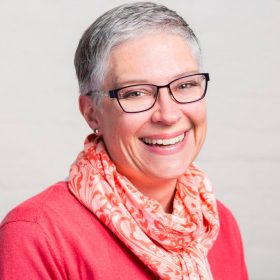
Liza is a certified Integrative Nutrition® Health Coach, author, and passionate advocate for women’s wellness in perimenopause and beyond.
Her EAT | Your Way to Health™ and Stewarding Emotional Eating™ programs support women in renegotiating their relationship with food, stress, and themselves, finally coming into full alignment their intuition and entering a season of sacred harvest in place of decline.
You can learn more about Liza here at Simply Health Coaching. www.simplyhealthcoaching.com