There’s a particular kind of disappointment that sneaks up on you in midlife.
It’s subtle at first. You spray the perfume you’ve worn for years, maybe decades, expecting that familiar cloud of comfort. The one that always felt like you. But something is off. The scent disappears faster than it used to. Or it smells sharper, almost foreign. Sometimes it’s barely there at all by noon.
You might assume the formula changed. Or that your nose is playing tricks on you.
But here’s what many women discover after 50: it’s not always the perfume that changed. Sometimes it’s us. Perfume changes after menopause are more common than anyone talks about, and understanding why makes all the difference. And that shift is not a bad thing.”
The Quiet Way Hormones Reshape Everything
By the time we reach our fifties, most of us have already made peace with the fact that hormones run more of our lives than we’d like. Sleep, skin, metabolism, mood. What’s less talked about is how they also affect something as personal as fragrance.
During and after menopause, shifting estrogen levels change the chemistry of your skin. Skin becomes drier, body temperature fluctuates, and even your natural scent evolves. All of it changes how perfume develops and how long it actually stays. Research published on the National Institutes of Health’s PubMed Central confirms that estrogen deficiency following menopause directly impacts skin moisture retention, barrier function, and overall skin chemistry, all of which affect how fragrance develops and lasts.
A fragrance that used to wrap around you for eight hours might now be gone by lunch. A soft floral you loved for years can suddenly feel too sweet, or strangely flat.
It’s not your imagination. It’s biology.
And honestly, it’s just one more reminder that midlife is a season of reinvention, sometimes in the most unexpected places.
When Your Signature Scent No Longer Feels Like You
Many of us have a long history with a particular perfume. It was the scent worn through a career, a marriage, the years of raising children. The fragrance friends recognized the moment you walked in. The one someone once said made you unforgettable.
Losing that connection can feel oddly emotional. More than it probably should.
But here’s the shift worth sitting with: fragrance doesn’t have to be permanent. It can evolve, just like we do.
Sometimes the perfume that once fit your life perfectly no longer reflects who you are now. That realization isn’t a loss. It’s an opening.
Perfume Changes After Menopause: Why Midlife Is Actually a Good Time to Rethink Your Scent
When we were younger, many of us approached fragrance the same way we approached everything: collecting, experimenting, chasing whatever was trending. In our fifties, something changes. We get more selective. Less interested in options and more interested in the right one. A fragrance that feels effortless. Specifically ours.
That same instinct tends to show up in how we dress, too. If you’ve noticed your style shifting alongside everything else, you’re not alone. This piece on finding your midlife style is worth a read.
For some women, exploring new fragrance territory means stepping outside the categories they’ve always shopped. Warm amber and woody base notes, which tend to linger longer on drier skin, are worth testing if your previous favorites are fading faster. Oriental and musky blends often have more staying power than light florals or citrus, which evaporate quickly and struggle to anchor on skin that’s lost some of its natural oils.
A fragrance like Jean Paul Gaultier Le Male, with its warm vanilla-lavender backbone, is one example of a heavier base-note-forward scent that tends to hold well on mature skin. Labels matter less than results. After 50, most of us have finally stopped buying things because we’re supposed to and started buying them because they actually work.
How to Get More Out of the Scent You’re Already Wearing
If your signature fragrance is fading faster, the solution isn’t necessarily replacing it. Often it starts with how you’re wearing it.
Dry skin is the main culprit. Fragrance molecules need something to anchor to, and on skin that’s lost moisture, they evaporate quickly. Applying an unscented moisturizer before you spray gives the scent a surface to cling to and can noticeably extend how long it lasts. If you’re already working on a solid skincare routine, this fits right in. If you’re not, this is a good reason to start. We have a practical guide to skincare for women over 50 that covers exactly that.
A few other things that actually help: spray directly onto your pulse points (wrists, base of the throat, behind the ears) where warmth helps release the scent slowly throughout the day. Skip rubbing your wrists together after applying. That friction breaks down the top notes and distorts the scent profile before it has a chance to develop. And fabric holds fragrance well, so a light spray on a scarf or the collar of a jacket can carry your scent long after your skin has moved on.
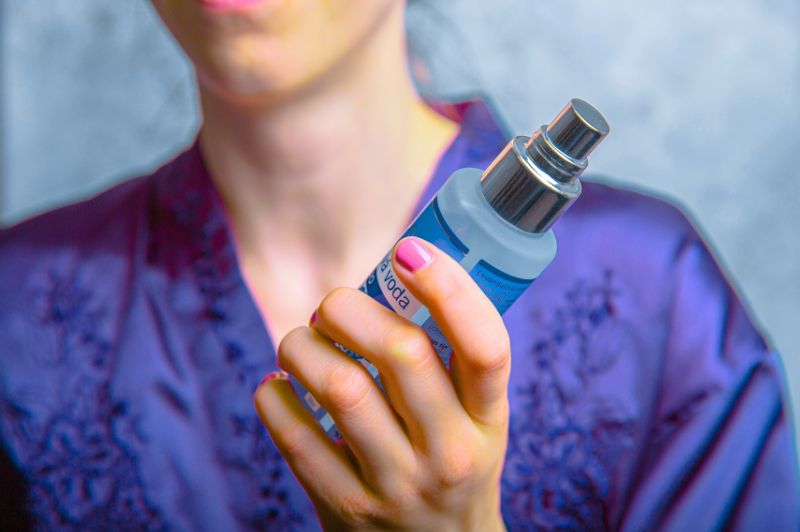
If you want to carry a small bottle for an afternoon refresh, go ahead. A light touch at midday is better than over-spraying in the morning and hoping for the best.
Proper Storage Makes a Real Difference
This one gets overlooked. Light, heat, and humidity degrade fragrance oils over time, which means that bottle sitting on your bathroom windowsill or your car cupholder is losing quality every day.
Store your perfume somewhere cool and dark. A bedroom drawer or a closed cabinet works well. When fragrance is stored properly, every spray performs the way it’s supposed to.
Fragrance as a Form of Self-Knowledge
There’s something quietly clarifying about realizing your signature scent no longer fits. It’s rarely just about the smell. It tends to be about the version of you that scent was attached to.
The fragrance that defined your thirties doesn’t have to define your fifties. Many women find that the search for something new becomes more interesting than they expected. Not because they’re trying to reinvent themselves, but because they’re finally paying attention to what they actually want rather than what they’ve always reached for out of habit.
If your signature scent stopped working the way it once did, it’s not a failure of the perfume. And it’s certainly not a failure of you. It’s simply your skin, your chemistry, and the woman you’ve become asking for something that fits better.
Sometimes the most useful thing midlife does is make the old defaults stop working.
Did you enjoy this contributed article? This post contains affiliate links. Sign-up for our Sunday newsletter and get your expert content delivered straight to your inbox.