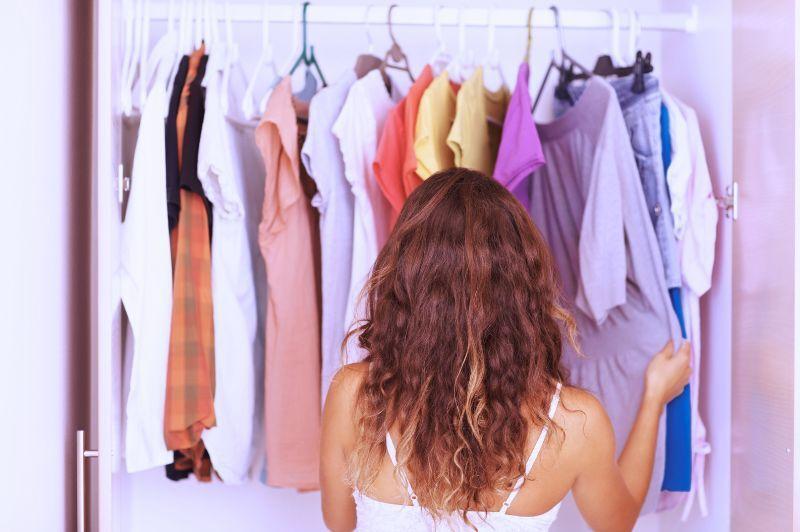
If getting dressed in the morning has started to feel like a negotiation you always lose, you’re not imagining things.
The waistband that worked fine last year now digs in by 10 am. The blouse you loved sits differently. Nothing has technically changed in your closet, but your body has, and your clothes haven’t caught up. That’s the menopausal belly problem, and it has nothing to do with your discipline or your effort. Hormones redistribute fat to the midsection, your old silhouettes stop cooperating, and suddenly you’re standing in front of a full closet feeling like you have nothing to wear. The right dresses for a menopausal belly don’t fix that by hiding you. They fix it by actually fitting the body you have right now.
Why Your Old Clothes Don’t Work Anymore (And It’s Not What You Think)
A menopausal belly isn’t a sizing problem. That’s the part most style advice gets wrong. It’s a bloating problem, a heat problem, a waistband-pressing-in-by-noon problem. Your skin is more sensitive to synthetic fabrics. Your body runs warmer than it used to. The belly itself can be completely different between 8 am and 3 pm. Clothes designed for a pre-menopause shape weren’t built for any of that. That’s why you can be the exact same weight and still have an entire closet that no longer works.
The instinct most women have is to go bigger, baggier, darker. It makes sense: cover it up, right? But shapeless doesn’t equal flattering. It equals invisible, and not in the way you want. If you want a clear breakdown of the specific mistakes that actually make things worse, this guide to what not to wear for a menopause belly is worth reading before you buy anything new.
Start With Fabric. Everything Else Comes After
This is the part people skip, and it’s usually why things go wrong. You can find a gorgeous silhouette in the wrong fabric and feel terrible in it all day. Thin jersey clings to every temperature change. Stiff cotton stands away from the body in odd places. Synthetic blends trap heat. None of that is comfortable on a normal day, let alone when you’re already dealing with hot flashes and midday bloating.
What actually works: soft woven blends with a little give, fluid cottons, lightweight knits that have structure without gripping, anything with enough drape to skim rather than stick. The test is simple: does this fabric move with you, or does it announce everything? Because your body is doing its own thing throughout the day, and you need clothes that can handle that without turning it into a spectacle.
Why Dresses for a Menopausal Belly Are Often the Easiest Answer
One piece. No waistband. No buttons pulling across the midsection. No top and bottom that refuse to sit right together, no matter how many times you tuck and re-tuck. A good dress just removes the problem.
The cut matters enormously, though. Midi lengths work well because they give coverage and proportion without reading as frumpy. A-line shapes skim the belly rather than gripping it. Wrap styles create definition at the waist without requiring a flat stomach underneath. Shirt dresses in a soft drape give structure without compression. What you’re avoiding: knit tube shapes, anything that cuts straight across the widest part of your midsection, and fabrics too thin to hold their form.
Empire-line cuts (fitted above the waist, relaxed below) are worth trying if you want something that doesn’t touch the belly at all. Tiered dresses can go either way. When the tiers start above the stomach, great. When they land right at the midsection, they add volume exactly where you don’t want it. Try those in person before you commit.
For days when it’s jeans, the same logic applies: high-rise, wide-leg cuts that skim over rather than compress. These jeans for a menopausal belly go into the specific cuts and washes that actually deliver.
Silhouette Over Size: The Proportion Rule That Changes Everything
Stop thinking about what size you need. Start thinking about what proportion works for your shape right now. A size up in the wrong cut still won’t look right. The same size in the right silhouette can feel like a completely different body.
The proportion that holds up across most body types: volume on the bottom (A-line skirt, wide-leg trousers, flared hem) paired with something more fitted on top, or a structured layer like a blazer or longer vest worn over a looser blouse. Maximum volume on both top and bottom simultaneously just adds width everywhere, which is the thing you’re trying not to do.
Defining the waist helps more than most people realize, even when done gently. A soft belt sitting slightly above the natural waist, a wrap tie, and a dress with some internal structure at the bust. Any of these creates the impression of a defined waist without anything pressing into your stomach. Clothes for menopause and perimenopause has good coverage of adaptive pieces that let you adjust fit depending on how the day is going.
Practical Outfits That Work on Repeat
You don’t need a wardrobe overhaul. You need maybe five combinations that work reliably, so you stop burning mental energy on getting dressed before you’ve even had coffee.
Here’s one that holds up for most occasions: a soft blouse with a longer hem that falls over the waistband rather than tucking in, paired with high-rise straight-leg trousers in a fabric with some body. Add a blazer or long cardigan, and it goes anywhere. Another that requires zero thought: a midi dress in a fluid fabric with flat sandals or clean sneakers. Done. For casual days, a matching co-ord in linen or cotton can look pulled together without feeling like you tried too hard.
The benchmark isn’t “does this look impressive.” It’s “am I thinking about my clothes right now.” If you’re adjusting something every hour, it’s not working. If you’ve forgotten you’re wearing it, that’s exactly where you want to be.
What Usually Makes It Harder
A few things are worth naming specifically. Cropped tops that hit at the widest point of the midsection create visual width right where you don’t want it, even if cropped tops worked for you before. Tight waistbands that press into the belly over the course of a day don’t disappear into the background; they become all you can think about. Clingy fabrics without structure, particularly thin jersey, make bloating and temperature changes visible in ways that feel uncomfortable before they even feel unflattering.
Shapewear deserves its own sentence. Some women genuinely find it useful. A lot of women find that spending an entire day compressed and overheated makes them feel worse, not better. That’s the opposite of the point. If it’s distracting you, it isn’t serving you. Clothes that fit right in the first place do more with a lot less effort.
One more thing: the menopause belly isn’t fixed. It’s different in the morning than it is at 4 pm. It changes with what you eat, how you sleep, and how much stress you’re carrying. Clothes with some flexibility built in: soft waistbands, wrap ties, fabrics with give. These handle that reality much better than anything sized for one specific moment of your day.
The Closet Principle That Actually Helps
Fewer pieces that genuinely work beat a full closet of things you talk yourself into wearing. One midi dress you reach for without thinking. One pair of trousers that fits the way your body actually needs them to fit right now. One top that layers well and doesn’t need adjusting. A shoe that goes with most of it.
That’s not about having less. It’s about not spending your mornings negotiating. When the clothes cooperate, getting dressed stops being a problem. That’s the whole point. For more on building a wardrobe that makes sense for where you are right now, how to dress for menopause covers the essentials. And for shape-specific advice, how to dress for your body shape after 50 is worth keeping open.
Your body isn’t the problem. The clothes that don’t fit are. A few that do make a bigger difference than you’d expect.
Frequently Asked Questions
What are the best dresses for a menopausal belly?
A-line, wrap-style, and empire-line midi dresses tend to work best. They skim over the midsection rather than gripping it, and the length creates proportion. Look for fabrics with drape and a little give: fluid cottons, soft woven blends, rather than thin jersey that clings.
Should I avoid fitted clothes if I have a menopause belly?
Not entirely. The issue is where the fit lands, not fit itself. Something that fits at the bust and skims from the waist down works better than either compression across the belly or shapeless volume everywhere. A well-fitted top worn with wide-leg trousers is a reliable combination.
Does shapewear help with a menopause belly?
It depends on the person. Some women find it useful; many find that the heat and compression make them uncomfortable over a full day. If it causes physical distraction, it’s not worth it. Better-fitting clothes in the right silhouette often do more with less effort.
What fabrics work best for menopausal dressing?
Breathable, soft fabrics with some drape: fluid cotton, linen blends, lightweight woven fabrics, soft knits with structure. Avoid thin synthetic jersey that clings, anything that traps heat, and very stiff fabrics with no give.
How do I dress for bloating that changes throughout the day?
Choose clothes with adjustable waistlines: wrap ties, soft elasticated waistbands, adjustable belts. Avoid anything with a rigid waistband or button-fly that presses into the belly. Dresses are often easier than separates for this reason.