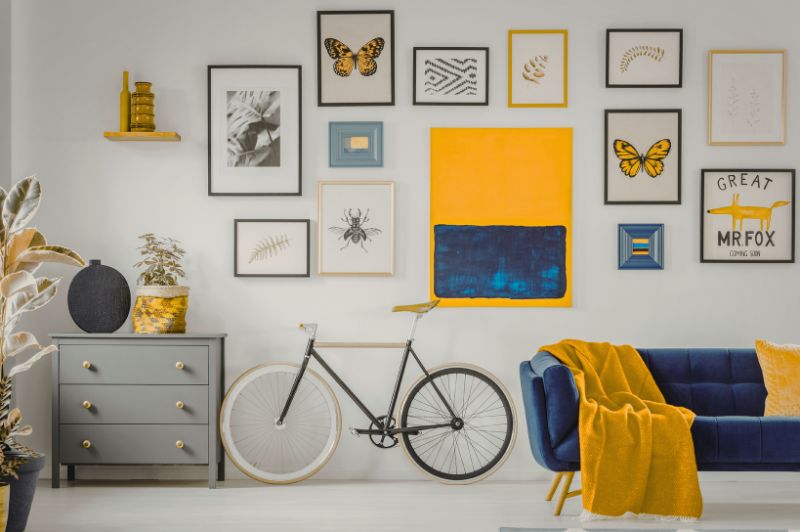
If you’ve ever wondered how to display art like an interior designer, this step-by-step guide will help you make your walls feel intentional, personal, and pulled together.
Your home is not a showroom. It’s your life—on walls, on shelves, in corners, in the way the light hits at 4 pm when you’re finally alone and exhale.
If you’re in midlife, you’re not decorating to impress anyone. You’re decorating to feel something: grounded, energized, soothed, seen. And nothing changes a room faster (or more personally) than art—when it’s hung well and chosen with intention.
Here’s how to display art like an interior designer without turning your house into a precious museum or a Pinterest panic spiral.
Step 1: Start With the Feeling, Not the Frame
Before you hang a thing, decide what you want this room to do for you.
Pick 3 words. Examples:
- calm, clean, confident
- bold, playful, alive
- warm, grounded, intimate
Those words become your filter. If a piece doesn’t fit the feeling, it doesn’t belong in that room right now.
This is exactly what we mean by building a home that supports who you are becoming, not who you used to be. If your space is shifting because your life is shifting, that is expected in midlife.
Pro move: Walk into the room and notice what your eye does first. That’s the story your space is currently telling. Decide if it’s the story you want.
Step 2: Choose a Focal Wall (Designers Don’t Treat Every Wall Equally)
Every room needs one “lead actor.” Not twelve.
Great focal wall options:
- above the sofa
- behind the bed
- over a console table
- the wall you see the moment you walk in
- the end of a hallway
If you’re in a season of editing—downsizing, decluttering, reclaiming rooms that used to be chaos—you may be staring at new blank space and thinking, “Now what?” You can shift your perspective.
Pro move: Don’t try to fill every blank wall. Blank space is not failure. It’s breathing room.
Step 3: How to Display Art Like an Interior Designer–Hang It at Human Height (Not Ceiling Height)
Most people hang art too high because they’re decorating for the wall instead of the person.
Use this designer rule of thumb: The center of the artwork should be about 57–60 inches from the floor (roughly eye level).
If you’re hanging art above furniture, keep the bottom edge of the frame about 6–10 inches above the top of the sofa/console/headboard.
Pro move: Use painter’s tape to outline the piece on the wall first. Live with it for a day. Your nervous system will tell you the truth.
Step 4: Get Scale Right (Big Wall Needs Big Energy)
Tiny art floating on a giant wall looks accidental. Like you meant to do more… and didn’t.
A clean guideline: If you’re hanging art above furniture, aim for the artwork (or full grouping) to take up about 2/3 to 3/4 the width of what’s underneath it.
For tall, narrow wall spaces (between windows, next to a door, at the end of a hall), vertical pieces are often the easiest win. If you want a visual reference for that shape, here’s a collection of vertical paintings for living room.
(You don’t need to buy from that site—the point is understanding how vertical proportions solve awkward spaces.)
Pro move: When in doubt, go larger. Midlife is not the time for timid walls.
Step 5: Build a Gallery Wall Without The Chaos
Gallery walls are gorgeous when they feel intentional—and messy when they feel like a scrapbook exploded.
Pick a layout style:
- Grid: same-size frames, evenly spaced (clean and modern)
- Salon-style: mixed sizes anchored by one larger piece (collected and warm)
- Linear: one straight line across (simple and sleek)
Spacing rule: Keep gaps consistent—usually 2–3 inches between frames. The easiest way to avoid regret:
- Trace each frame on paper (or cut kraft paper templates)
- Tape the shapes to the wall
- Step back
- Adjust until it feels “quiet in your brain”
- Then hang
Pro move: Start with your largest piece first, then build outward. Don’t start with the tiny ones—you’ll end up chasing the layout.
Step 6: Light It Like You Mean It
Great art in bad lighting doesn’t look bad. It just looks… irrelevant. Like it’s waiting to be noticed.
What you want:
- layered lighting (not just overhead)
- less glare on glass
- warmer bulbs for cozy spaces, clearer light for galleries/hallways
If you’re looking for a practical overview of lighting that actually enhances the appearance of walls (and includes examples), this Houzz guide is a valuable resource.
Pro move: If glare is killing your vibe, shift the lamp angle first. If that doesn’t solve it, consider non-glare acrylic instead of glass next time you frame.
Step 7: Mix in Personal Photos (Without Turning Your Home Into a Shrine)
Yes, photos belong on the walls. But not all of them. And not scattered like confetti.
Use these designer rules:
- group photos in one zone (hallway, staircase, family room)
- keep frame style consistent for cohesion
- mix black-and-white photos with color art to calm the wall
- avoid “random singles” unless they’re intentionally styled
If you want approachable, practical ideas for displaying family photos (without it looking like a college dorm), the DIY Playbook is a good place to start.
Pro move: Pick your top 12 photos. Not 42. Your house does not need to document every year since 2007.
Step 8: Let your walls tell the truth about who you are now
Your art doesn’t need to match your throw pillows. It should match your identity.
Midlife is a chapter where a lot of women stop curating for approval and start curating for alignment. Your walls can reflect that:
- a piece from a trip that changed you
- a print that makes you feel brave
- something handmade or imperfect that feels like freedom
If your home is part of your reinvention (it usually is), you may enjoy a deeper layer of owning your story, all of it, in midlife.
Pro move: Add one piece that represents who you’re becoming, not who you used to be.
Step 9: Refresh instead of replacing
You don’t need a new home. You need new eyes.
Easy refresh ideas:
- rotate pieces between rooms seasonally
- swap the art above a console with something from the bedroom
- restyle what sits under the art (lamp, plant, books)
- take one thing down (blank space counts as a design choice)
Pro move: Once a year, do a “wall edit.” If something feels like it belongs to an old version of you, it’s allowed to come down.
The Goal isn’t Perfection. It’s Presence.
Interior designers aren’t doing magic. They’re making decisions.
Hang at human height. Choose a focal wall. Match scale to space. Use lighting that supports the mood. Mix photos with intention. And most importantly, let your home reflect your life now.
Because a room doesn’t feel right when everything matches.
It feels right when everything belongs.
Disclaimer: This article is for informational purposes only. Always follow manufacturer instructions for hanging hardware and use appropriate anchors for your wall type. If you’re unsure or if the piece is heavy or valuable, consult a qualified professional installer.
Did you enjoy this contributed article? This post contains affiliate links. Sign-up for our Sunday newsletter and get your expert content delivered straight to your inbox.