Learning to slow down after retirement is rarely as simple as it sounds–especially when your body has spent decades memorizing urgency.
As a retired teacher, I spent years waiting for the bell to ring so I could finally run to the bathroom.
The school day moved according to clocks, schedules, bells, announcements, and the constant needs of others. There was always another lesson to plan, another meeting to attend, another child who needed attention before the next class arrived at the door. Even lunch felt hurried, eaten quickly between responsibilities.
After work, I would rush through the grocery store, strumming my cart along to the piped-in music overhead as if speed itself were a virtue. I waved quick hellos at neighbors while grabbing the mail, rarely stopping long enough for a real conversation. Who had time? I was working full-time, raising a family, keeping a household afloat, trying to do all the things women are expected to do without dropping a single one.
Somewhere along the way, rushing became more than a habit. It became my way of life.
And perhaps, for many women, it does.
The Weight Women Carry
We learn early that our value is often measured by how much we can carry. We become experts at multitasking, caretaking, anticipating needs, and pushing through exhaustion. We wear busyness almost like a badge of honor. Productivity becomes intertwined with identity. There is always somewhere to be, something to finish, someone waiting.
Learning to Slow Down After Retirement
Even after retirement, I did not immediately know how to stop. If you’re still in the process of preparing for retirement in midlife, know that the mental unlearning begins before the last day of work — and continues long after.
When Slowing Down After Retirement Feels Wrong
At first, the quiet felt unfamiliar. I still walked quickly through stores for no reason at all. (Where was I rushing off to?) I still felt anxious if I lingered too long over morning coffee. My body had memorized urgency. It had lived inside deadlines and obligations for so many years that slowing down felt unnatural, almost irresponsible. Research on adjusting to retirement confirms this is common — the psychological transition often lags months or years behind the practical one.
But gradually, something inside me began to soften.
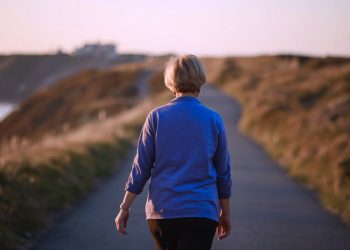
I started lingering at the mailbox instead of waving from afar. I began having conversations that were not squeezed between errands. I noticed birdsong in the morning. I took slower walks. I sat outside at dusk without feeling guilty for doing “nothing.”
And in that slowing down, I discovered something surprising: life became richer.
What the Third Act Actually Offers
There is more quiet now. More surrender. Less resistance.
In this third act of life, I no longer feel the same need to outrun the day. I no longer measure my worth by exhaustion. The world did not fall apart because I slowed my pace. In many ways, it opened.
I notice things now that I once hurried past — the way light settles across the kitchen table in late afternoon, the comfort of an unhurried conversation, the simple pleasure of drinking coffee while it is still hot. I listen more fully. I breathe more deeply.
Slowing down has not made my life smaller. It has made it more present.
No Regret for the Woman Who Rushed
And this is not regret. I do not blame the woman who rushed through those earlier years. She was doing her best to hold an entire world together. There was beauty in that season too — in the raising of children, the shaping of young minds, the devotion to family and responsibility.
But there is beauty in this season as well.
A quieter beauty.
The beauty of no longer needing to prove my worth through constant motion. The beauty of understanding that rest is not laziness, and stillness is not failure. The beauty of finally arriving fully inside my own life.
These days, when I walk to the mailbox, I often stop and talk awhile. I am no longer racing the clock. I am simply here. At this stage of my life, I no longer measure my days by how much I accomplished before sunset. I measure them by how fully I was present inside them.
And perhaps that is one of the hidden gifts of aging: learning that life was never meant to be rushed through in the first place. I no longer rush. Not because life has become less precious — but because I finally understand that it is.
Pause and Practice
A Practice for Learning to Slow Down
This week, choose one ordinary activity and do it without rushing. Walk to the mailbox. Drink your morning coffee. Take a short stroll around the block. Leave your phone behind and resist the urge to multitask.
As you move more slowly, notice what you usually miss. What do you see, hear, or feel when you are not hurrying toward the next thing?
At the end of the day, ask yourself: Did slowing down make my life smaller — or did it make it richer?
Sometimes the sacred art of resisting the rush begins with a single unhurried moment.
Did you enjoy this article? Become a Kuel Life Member today to support our Community. Sign-up for our Sunday newsletter and get your content delivered straight to your inbox.

About the Author:
Maria da Silva is a practicing shaman, writer and traveler who lives in Plymouth, Massachusetts and travels frequently to her home islands of the Azores. The founder of Wise Shaman Within, she is bringing peace, healing, and light to the world one client and one workshop at a time. Maria provides individual client sessions and also facilitates workshops in both the USA and Portugal. Visit her website: Wise Shaman Within.