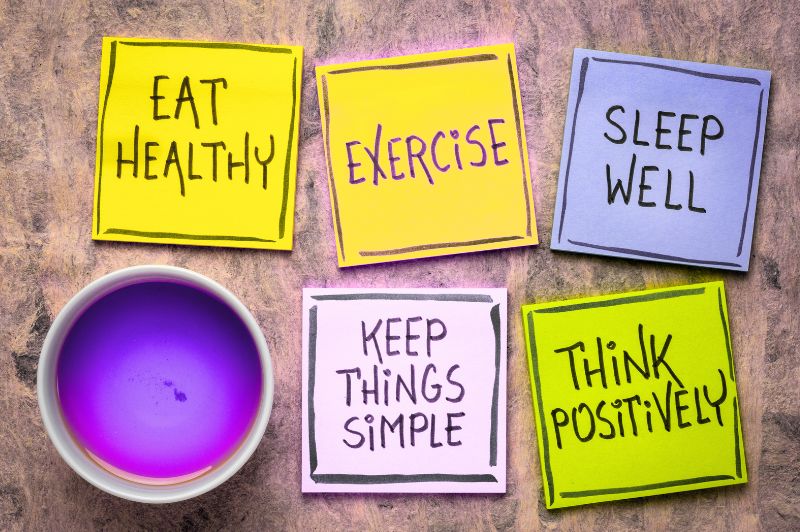
The menopause lifestyle changes that actually move the needle aren’t random; they follow a sequence, and starting in the wrong order is why so many women feel like they’re doing everything right and still hitting a wall.
You already know the list. Eat better. Exercise more. Manage stress. Sleep. You’ve probably tried most of it. And maybe it helped a little, or helped for a while, and then stopped feeling like enough.
Here’s what the list doesn’t tell you: menopause lifestyle changes work best in a specific sequence. Your body runs on a 24-hour hormone clock, and when that clock gets disrupted, no single habit, however good, can fully compensate. Blood sugar instability raises cortisol. Elevated cortisol breaks sleep. Broken sleep destabilizes blood sugar the next morning. Hot flashes interrupt the whole thing at 2 a.m.
These aren’t separate problems. They’re one loop. And the way to break the loop isn’t to do everything at once. It’s to start where the loop is most vulnerable, which turns out to be earlier in the day than most women expect.
Why Menopause Disrupts Your Body’s Daily Rhythm
Before menopause, estrogen and progesterone quietly help regulate your body’s internal clock, the 24-hour circadian rhythm that coordinates when cortisol rises, when insulin sensitivity is strongest, when melatonin builds, and when your body temperature drops to signal sleep. These hormones are part of how your system stays synchronized.
When they decline, that synchronization loosens. Cortisol, which is supposed to peak in the morning and taper through the day, becomes erratic. Blood sugar regulation, which was partly estrogen-dependent, becomes less forgiving. Sleep architecture shifts. And suddenly habits that used to work, regular exercise, a reasonable diet, even a glass of wine at the end of the day, start producing different results than they used to.
This isn’t a willpower problem. It’s a timing problem. Which means the fix isn’t trying harder. It’s sequencing smarter.
Start Here: Stabilize Blood Sugar Before Anything Else
What Menopause Does to Your Morning Blood Sugar
If you only change one thing right now, make it this: stabilize your blood sugar in the morning.
Here’s why this matters so much. When estrogen declines, insulin sensitivity drops with it (research on estrogen’s role in insulin sensitivity). Your body becomes slower to manage glucose, which means what you eat first thing in the morning now has a much longer ripple effect through your day than it did at 38. A high-carb breakfast, or worse, skipping breakfast entirely, can set off a blood sugar swing that triggers a cortisol response that leaves you anxious and tired by noon, craving sugar by 3 p.m., and wired at bedtime.
The fix is not complicated. Eat protein within an hour of waking. Aim for 25 to 30 grams, which sounds like a lot until you realize it’s two eggs and some Greek yogurt, or a protein smoothie with nut butter. Add some fiber. Avoid eating a bowl of cereal or toast and calling it done.
This one adjustment tends to quiet a surprising number of other symptoms because it removes the blood sugar instability that was quietly amplifying them. Women who stabilize blood sugar often notice that afternoon energy crashes improve, that hot flashes feel less severe, and that sleep is somewhat better, before they’ve changed anything else. Start here.
Layer In Stress Management Before It Layers Itself In
Once you have blood sugar under some control, the next place to work is cortisol.
Cortisol naturally peaks in the morning and declines through the day. That’s the design. But chronic stress, irregular sleep, and the hormonal shifts of menopause can all cause cortisol to stay elevated into the evening, which is exactly when it shouldn’t be. Elevated evening cortisol is one of the more reliable drivers of the “tired but wired” feeling that so many women in midlife describe. You’re exhausted. You also cannot fall asleep.
The good news is that cortisol responds quickly to small, consistent interventions. You don’t need an hour of meditation. Ten minutes of deliberate downregulation mid-afternoon, diaphragmatic breathing, a short walk outside, five minutes without your phone, genuinely works. The goal is to create a predictable drop in cortisol before evening arrives, so your body can actually begin preparing for sleep.
What makes this step second rather than first is that cortisol regulation is harder to sustain when blood sugar is chaotic. Fix the blood sugar foundation first, and stress management practices become noticeably more effective.
Time Your Movement to Support Sleep, Not Fight It
Exercise is non-negotiable for menopause. Strength training in particular, because it preserves muscle mass, supports bone density, and directly improves insulin sensitivity. Aerobic movement matters too, for cardiovascular health, mood, and hot flash frequency over time.
But timing matters more in midlife than it did before.
High-intensity exercise in the late afternoon or evening can cause cortisol to spike at exactly the wrong time, making it harder to fall asleep and stay asleep. For most women, morning or mid-morning is the better window for harder workouts. If evening is your only option, keep the intensity moderate and allow time to wind down before bed.
A 20-minute strength session three times a week is enough to start seeing metabolic benefits. A daily walk of any length supports glucose regulation and nervous system calm without the cortisol cost. You don’t have to overhaul your fitness life. You have to be strategic about when you move and what you ask of your body at different points in the day.
Treat Sleep as the Anchor, Not the Afterthought
Sleep is usually framed as one item on the lifestyle change checklist, somewhere between “manage stress” and “drink more water.” That framing undersells what’s actually happening.
Sleep is where everything else either consolidates or unravels. A good night of sleep stabilizes cortisol for the following day. It restores insulin sensitivity. It supports mood regulation, which makes stress management easier the next morning. It’s not a passive outcome. It’s the anchor that holds the whole rhythm together.
This means protecting sleep is less about adding another thing to your routine and more about removing what’s working against it. Consistent sleep and wake times matter more than most people think, because they reinforce the circadian rhythm that menopause has been quietly destabilizing. A cool sleeping environment helps because your body needs to drop core temperature to initiate and maintain sleep, and hot flashes are essentially the opposite of that. Avoiding alcohol in the evenings matters because even a single drink fragments sleep architecture, even if it helps you fall asleep initially.
Start with one change if the full list feels like too much. Pick the consistent wake time first. It’s the single habit most likely to improve sleep quality on its own, because it anchors the whole circadian rhythm around a fixed point.
Feed the Rhythm, Not Just the Body
The nutritional guidance for menopause is usually presented as a list of things to eat and things to avoid. More phytoestrogens. Less alcohol. More omega-3s. Less sugar. All of that is accurate, but it misses something important: when you eat matters almost as much as what you eat.
Regular meal timing, eating at roughly consistent times each day, helps stabilize blood sugar and supports circadian rhythm. Skipping meals or eating erratically introduces the kind of metabolic unpredictability that cortisol fills in for, which is not what you want. For a closer look at the specifics, our guide on what to eat during perimenopause goes deeper on protein, fiber, and meal timing.
Some specifics worth knowing: protein at every meal supports muscle preservation and blood sugar stability. Magnesium-rich foods, such as leafy greens, pumpkin seeds, and almonds, support sleep quality and help buffer stress. Anti-inflammatory eating, less ultra-processed food, more whole foods and healthy fats, reduces the systemic inflammation that menopause tends to amplify.
None of this requires perfection. It requires reasonable consistency. Which, given everything else you’re managing, is the only version of any of this that actually holds.
What to Expect When You Start Sequencing
You’re probably not going to feel dramatically different in week one. That’s worth saying plainly, because a lot of wellness advice implies that the right changes produce immediate results, and when they don’t, women blame themselves.
What tends to happen is a slow, compound improvement. Blood sugar stabilization in week one often means fewer afternoon energy crashes. Adding stress management in week two or three means evenings feel a little less chaotic. Getting sleep more consistently over a month means mornings feel more manageable. It builds.
What also tends to happen is that when the rhythm is interrupted by travel, illness, or a difficult week, symptoms can return quickly. That’s not failure. That’s how tightly your hormones are now tied to your daily patterns. The solution is the same as it always was: come back to the sequence, start at blood sugar, and rebuild from there.
For a deeper look at how these systems interact and why the hormonal changes of menopause affect each one, the article on natural solutions for menopause covers the full picture.
Menopause doesn’t respond well to willpower or white-knuckling through a long list of improvements. It responds to rhythm. A body that knows what to expect, when to expect it, and doesn’t have to fight for stability every day is a body that can manage this transition with significantly less noise.
You don’t have to build the whole routine at once. Start with breakfast. Make it protein-forward and consistent. See what that changes. Then add one more thing. Let the sequence work before you complicate it.
The goal isn’t a perfect day. It’s a predictable one.
Menopause Lifestyle Changes: Research and Clinical Sources
Estrogen and insulin sensitivity: Mauvais-Jarvis F. “Estrogen and androgen receptors: regulators of fuel homeostasis and emerging targets for diabetes and obesity.” Trends in Endocrinology and Metabolism, 2011; 22(1):24-33. PMC3011051.
Cortisol and menopausal transition: Woods NF, Mitchell ES, Smith-DiJulio K. “Cortisol levels during the menopausal transition and early postmenopause: observations from the Seattle Midlife Women’s Health Study.” Menopause, 2009; 16(4):708-18. PMID: 19322116.
Circadian rhythms and women’s aging: Malhan D, Yalcin M, Liedtke S, et al. “A prospective study to investigate circadian rhythms as health indicator in women’s aging.” npj Women’s Health, 2025; 3:18. Note: study protocol currently in recruitment phase.
Sleep restriction and cortisol: Vgontzas AN, Zoumakis E, Bixler EO, et al. “Adverse effects of modest sleep restriction on sleepiness, performance, and inflammatory cytokines.” Journal of Clinical Endocrinology and Metabolism, 2004; 89(5):2119-2126.
Sex hormones, exercise, and menopause: Hackney AC (ed.). Sex Hormones, Exercise and Women: Scientific and Clinical Aspects, 2nd ed. Springer Nature, 2023. ISBN: 978-3-031-21880-4.
International Menopause Society 2025 White Paper on Lifestyle Medicine: Anekwe CV, Cano A, Mulligan J, et al. “The role of lifestyle medicine in menopausal health: a review of non-pharmacologic interventions.” Climacteric, 2025; 28(5):478-496. doi:10.1080/13697137.2025.2548806.
Disclaimer: This article is for informational and educational purposes only and is not intended as medical, dermatological, or mental health advice. Individual health needs vary. Always consult a qualified healthcare professional before making changes to your health, skincare, supplements, or wellness routine.
Did you enjoy this article? Become a Kuel Life Member today to support our Community. Sign-up for our Sunday newsletter and get your content delivered straight to your inbox.