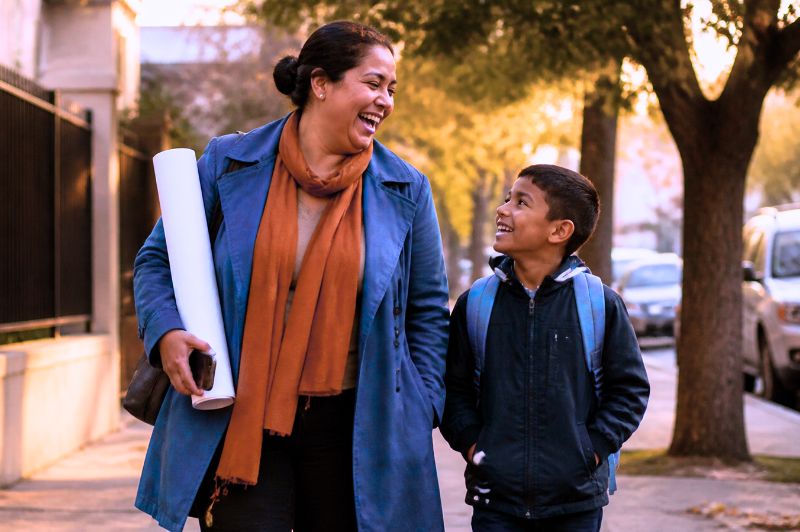
Raising kids in your 50s has Tuesdays like this one: your nine-year-old needs poster board by tomorrow, your mother has a cardiology appointment at two, and a board meeting just landed on top of both. Somewhere in a policy report, the woman handling all of this is being described. She’s 41.
That’s the average age of a sandwich caregiver, according to testimony before the Senate Special Committee on Aging in May 2026, where the National Alliance for Caregiving also noted these caregivers are mostly women. What that picture leaves out is you: past 50, still raising young kids, watching your parents age in real time, and carrying a career that is finally paying off.
If you’ve ever been asked at school pickup whether you’re the grandmother, you already know how that feels.
Nobody Drew the Map for This Version of Midlife
More women are having children in their 40s. The CDC reports that the fertility rate for women 40 and older rose 24% between 2015 and 2024. Run the numbers on a baby born at 42, and you get a fourth grader at 51 and a high school senior at 60.
Caregiving has also become a two-direction job. AARP and the National Alliance for Caregiving found that 29% of family caregivers are caring for children and adults at the same time.
Now look at who the conversation is built around. The parenting blogs and the “how to care for Mom” checklists assume a younger woman, or one whose kids have already left home. Your friends are booking trips without children. The parents at school pickup may be 15 years younger, with parents of their own still in their 60s. You belong to both groups and neither.
Your body didn’t get the memo either. If you’re in perimenopause or past it, hot flashes don’t pause for the science fair. Sleep gets interrupted from both ends of the family tree: a kid with a nightmare at 2 a.m., a call about your dad at 6. Your energy at 52 isn’t what it was at 37, and pretending otherwise earns you exactly nothing.
Nobody designs support for a life they can’t see. So you’re going to design your own, and you’re allowed to be picky.
The Grandparent Safety Net You Don’t Get
Most families have a backup they rarely talk about. According to AARP research released in June 2026, 69% of grandparents provide care for their grandchildren, averaging more than 500 hours a year. AARP puts the value of that unpaid care at $731 billion annually. A lot of American childcare runs on Grandma.
If you had kids at 42, your parents were likely in their 70s by the time those kids started school. Now they may be the ones who need rides to appointments. If that’s your reality, Kuel Life’s guide to caring for an aging parent covers that side of the load in depth.
Your parents don’t vanish from your kids’ lives because of this. A grandmother who can’t handle the playground might be the best bedtime reader in the family. Being present in a child’s life is different from being responsible for supervising them. Ask your parents which one they want, and believe the answer.
Researchers have spotted the same pattern. Dr. Siobhan MacDermott of Dublin City University told The Irish Times that older mothers tend to use more formal childcare, possibly because their own parents can’t step in. So if you’re paying for help your friends got free from their mothers, that’s the timeline talking, not a verdict on you.
Raising Kids in Your 50s Means Designing Your Own Support
Start with last week, the real one. Where are the gaps? School dismissal to 6:30? Early mornings when a meeting starts at eight? The afternoons your mother needs you across town?
After-school programs are the most structured answer. Kids get supervision and other kids to burn off energy with. In New York, center-based before- and after-school care averaged about $12,447 a year in 2024, according to Child Care Aware of America. The catch is that the hours don’t bend when your day does.
A part-time nanny or sitter bends more. She can do the 3:15 pickup and stay late when your meeting runs over. She also makes you an employer, with payroll taxes to handle and a backup plan to find when she’s sick.
Then there’s the au pair route, where a young adult from abroad lives with your family through a federally regulated exchange program. Families in a high-cost, high-chaos city sometimes look at an au pair in New York for steady coverage around unpredictable workdays. The rules are firm: no more than 10 hours a day or 45 a week of childcare, and you provide a private bedroom. You’re also bringing a new person into your home, culture and quirks included. Some households love that. Others find it’s one person too many.
Plenty of families end up with a patchwork: an after-school program on weekdays, a standing sitter on Thursdays, and Grandma’s Saturday story hour. No single option works for every family. The right one fits your space and your budget.
Your Ambition Is Not the Line Item to Cut
Sooner or later someone will suggest that something has to give, and they’ll mean your career. Look around, though. Forbes’ latest 50 Over 50 class is full of women doing their biggest work after 50. Your experience is an asset, and pausing it has a cost. Do the other math, too: a kid starting college when you’re 60 lands right when retirement planning gets serious. It’s worth working out how to pay for college without wrecking your retirement while you still have runway. Your income is part of how this family works.
Try sorting your responsibilities into two piles. Pile one needs you there in person: the school play, the conversation with your mother’s doctor, the night your kid can’t sleep. Pile two can be shared: routine pickups, homework help, the grocery run, the Tuesday soccer carpool. Protect pile one. Hand off pile two without apology.
What Your Kids Need to Hear When Grandma Needs Help
If a parent’s needs start reshaping the household, tell your kids what’s happening in plain words. A nine-year-old can understand that Grandpa needs help walking and still be annoyed that dinner moved to five o’clock. Let them be annoyed. What they don’t need is a job. Kids can pitch in with small, kind things, but the caregiving decisions stay with the adults.
Asking for Help Is Not a Confession
You’re raising kids in your 50s and backing up your parents while your career runs at full speed, all in a culture that still pictures you as either a grandmother or an empty nester. Of course you need help. Get the kind that fits the family living in your house, and stop apologizing for it. Then guard a few hours a week that belong to nobody but you.
Did you enjoy this contributed article? This post contains affiliate links. Sign-up for our Sunday newsletter and get your expert content delivered straight to your inbox.