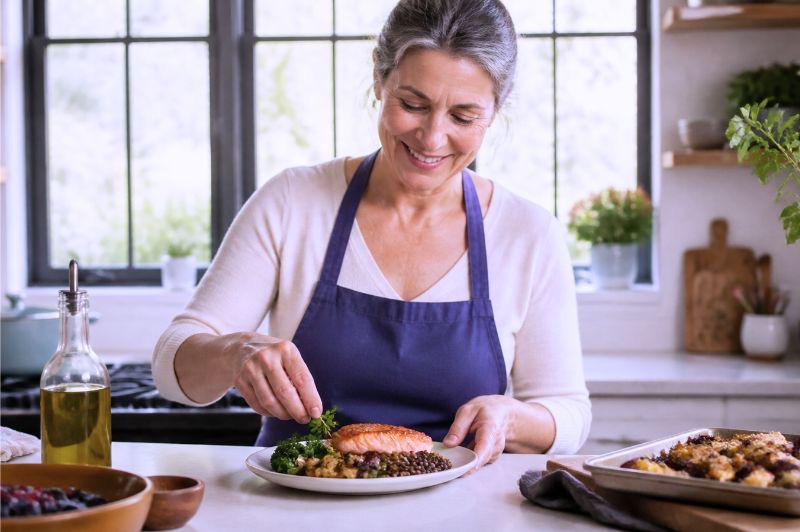
Your waistline changed the rules without asking, and no, it isn’t a willpower problem. Menopause weight gain and inflammation feed each other: most midlife weight gain comes from aging, falling estrogen moves more of it to your belly, and that belly fat sends out inflammatory signals linked to insulin resistance and even more belly fat. Eating more oily fish, leafy greens, berries, olive oil, nuts, legumes, and whole grains, and less ultra-processed food, added sugar, and alcohol, may help calm the inflammation. Strength training and sleep matter just as much.
We’ve covered the hormone side in hormonal belly fat after 50 and the metabolism side in the 50+ metabolic 3. This one is about your plate: what inflammation has to do with your middle, and what to eat to turn the heat down. No crash diets, no 21-day resets, no cabbage soup.
Why Does Weight Shift to Your Middle During Menopause?
Two things are happening at once, and the internet loves to blur them together.
The first is time. The International Menopause Society reviewed the research and found that the steady midlife gain of about half a kilogram a year, roughly a pound, comes from aging rather than menopause itself. Muscle declines, daily movement drops, and your calorie needs drop with them.
The second is where it lands. The same review found that the hormonal changes of menopause are linked to more total body fat and more of it around the abdomen. Estrogen used to route fat to your hips and thighs. As it falls, more settles around your middle, including visceral fat, the deeper kind packed around your organs.
Which is why so many women swear the scale barely moved and their jeans still staged a revolt.
Does Inflammation Cause Weight Gain?
It’s one of the most searched questions on this topic, and the answer mostly runs the other way.
Visceral fat is active tissue, and it releases inflammatory chemicals into your bloodstream. A 2020 study of healthy women aged 45 to 60 found that postmenopausal women had higher levels of inflammatory markers than premenopausal women, and that visceral fat was a strong predictor of higher white blood cell counts, another sign of inflammation. The researchers suggested that visceral fat and falling hormones both play a part. A 2021 study from the same group found that postmenopausal fat tissue showed more inflammation, and that this went along with more visceral fat, while the visceral fat itself was linked to insulin resistance.
Insulin resistance makes it harder for your body to use blood sugar well, and it tends to encourage more fat storage around the middle. So it’s less a straight line than a loop: belly fat drives inflammation, and inflammation plus insulin resistance make belly fat easier to gain and harder to lose.
The research doesn’t show inflammation adding pounds all on its own. What it shows is two problems feeding each other, and the same habits interrupt both.
What Are the Best Anti-Inflammatory Foods for Menopause?
No superfood is coming to save you. What works is a pattern, and the one with the most evidence behind it is the Mediterranean diet. A meta-analysis of clinical trials found that eating this way lowered C-reactive protein and interleukin-6, two common markers of inflammation in the blood.
In real life, that means building meals around:
- Oily fish such as salmon, sardines, mackerel, and trout, at least twice a week
- Leafy greens and other vegetables, lots of them, in lots of colors
- Berries and other whole fruit
- Extra virgin olive oil as your main cooking and salad oil
- Nuts and seeds, a small handful a day
- Beans, lentils and chickpeas
- Whole grains such as oats, barley, brown rice and quinoa
Harvard Health suggests aiming for at least two servings of fatty fish a week and at least five servings of fruits and vegetables a day. Fiber deserves a gold star here. It feeds the gut bacteria that make anti-inflammatory compounds, and it keeps blood sugar steadier, which matters if insulin resistance is part of your picture.
If your sleep is also a mess, Lorraine Miano’s 15 foods that help hormone imbalance insomnia overlaps nicely with this list.
Which Foods Make Inflammation Worse?
The foods most linked to inflammation are, annoyingly, the same ones that make weight harder to manage.
Ultra-processed foods top the list. These are packaged products made mostly from refined ingredients and additives, like sweetened cereals, packaged snacks, ready meals, and processed meats. A 2025 review of the research found that in most adult studies, eating more ultra-processed food went with higher C-reactive protein levels.
Added sugar and refined carbohydrates come next: sugary drinks, white bread, pastries and sweets. They spike your blood sugar fast and leave you hungry again soon after.
Then there’s alcohol. It adds calories, wrecks sleep, and makes the 10 p.m. snack drawer look a lot more interesting. That’s a hard combination to out-eat.
You don’t have to swear any of these off. Make them the occasional guest, not the roommate.
What Does a Calming Plate Look Like?
Eating this way doesn’t require a meal-prep Sunday or a new personality.
Breakfast could be Greek yogurt with berries, walnuts and a spoonful of ground flaxseed, or oats cooked with cinnamon and topped with fruit and nuts.
Lunch could be a big salad of leafy greens, chickpeas, cucumber, tomatoes and tinned salmon, dressed with olive oil and lemon.
Dinner could be roasted trout or chicken with a pile of roasted vegetables and a scoop of quinoa or lentils.
Snacks could be an apple with almond butter, hummus with carrots, or a small handful of nuts.
Notice that every meal includes protein. It keeps you full and protects your muscle, which is its own story (link to “How Much Protein Do Women Over 50 Need to Protect Muscle and Manage Menopause Weight?” once that post is live).
Can Diet Alone Undo Menopause Weight Gain?
No, and anyone who promises otherwise is selling you a program.
Strength training matters as much as food. Muscle burns more energy than fat, even at rest, and women tend to lose it through midlife. Two or three sessions a week with weights or resistance bands helps you keep it. Karen Viesta shares practical steps to banish belly fat in midlife.
Sleep matters too. Short or broken sleep makes hunger harder to manage and pulls you toward sugar, as Dr. Barbara L Katz explains in the role of sleep in weight loss after 50.
Stress gets a vote. Chronic stress messes with sleep and appetite, so the walks, the breathing, and the boundaries you set to protect your peace also help your middle.
And your liver is doing more of the work than you might think. It processes hormones along with everything you eat and drink, which Diane Amelia Read covers in 3 steps to support your liver after menopause.
Frequently Asked Questions
Does Inflammation Cause Menopause Weight Gain?
It’s one linked factor, alongside hormones, muscle loss, sleep, and stress. Most of the evidence shows belly fat driving inflammation, with inflammation and insulin resistance then making belly fat easier to gain. The two feed each other.
What Are the Best Anti-Inflammatory Foods?
Oily fish, leafy greens, berries, olive oil, nuts, legumes and whole grains. Together they make up the Mediterranean eating pattern, which has the strongest evidence for lowering markers of inflammation.
What Should I Limit?
Ultra-processed foods, added sugar, refined carbohydrates, and alcohol. You don’t have to cut them out completely, but making them occasional rather than daily helps with both inflammation and weight.
Will Diet Alone Fix It?
No. Strength training, sleep, and stress management matter just as much. Food helps calm inflammation, but muscle, rest, and a steadier nervous system are what make the changes stick.
Menopause rewrote where your body stores fat, and you don’t owe anyone an apology for that. You can eat in a way that cools the inflammation riding along with it, which beats every crash diet you’ve ever been sold.
Disclaimer: This article is for informational and educational purposes only and is not intended as medical, dermatological, or mental health advice. Individual health needs vary. Always consult a qualified healthcare professional before making changes to your health, skincare, supplements, or wellness routine.