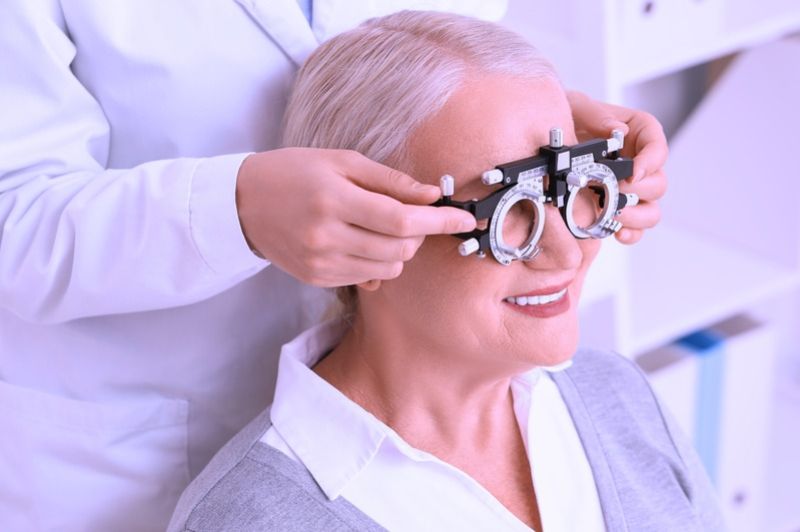
Choosing an optometrist or ophthalmologist after 50 usually starts with a moment you know: you hold the menu a little farther away than you used to. Headlights on the drive home feel like someone is aiming them at you. And somewhere along the way, someone has probably told you it’s just your age.
Sometimes they’re right. Presbyopia, the change that makes close-up focus harder, happens to everyone, usually after 45. But “just your age” is an answer, not an exam. Women carry a higher burden of vision loss than men, and a US study drawing on a national eye registry found that living longer doesn’t fully explain the gap. So before you settle for a shrug, here’s how to get the right assessment from the right person.
“Just Getting Older” Is an Answer You Get to Question
The conditions worth catching in midlife rarely announce themselves. Early cataracts have no symptoms; later ones bring blur, faded colors, light sensitivity, and trouble seeing at night. Glaucoma is usually painless and takes side vision first, slowly, which is why about half the people who have it don’t know.
How your eyes feel, in other words, is a lousy progress report. And the belief that fading vision simply comes with the territory is one of the barriers that keeps women from getting care, according to the International Agency for the Prevention of Blindness. With glaucoma, waiting costs you: the damage is quiet, and vision lost to it can’t be restored. You’re allowed to want an actual look.
Optometrist or Ophthalmologist After 50: Match the Doctor to the Reason
Start with why you’re booking: a routine checkup, a symptom that keeps coming back, or something that changed overnight. Each one points to a different chair.
Optometrists hold a doctor of optometry degree. They do comprehensive exams, prescribe glasses and contacts, and diagnose and treat many eye conditions, though they rarely do surgery. Ophthalmologists are medical doctors (MD or DO) who handle the full medical and surgical side of eye care.
For a routine exam, readers that no longer cut it, or a new but non-urgent concern, an optometrist is a solid first stop. A diagnosed condition, a second opinion on treatment, or talk of surgery is ophthalmologist territory. Plenty of practices have both under one roof, which makes the handoff easier if your exam turns something up. If you’re looking for an ophthalmologist in Chicago, a directory that lists both types of doctors and their areas of focus lets you match your reason to the right person before you call.
When you schedule, tell the office exactly why you’re coming in, because the reason you give shapes the appointment you get. Once you know which type of doctor you need, these questions that reveal a good eye doctor after 50 help you size up the practice itself.
How Often to Go, and Why Your Answer May Differ
For adults with no symptoms and no risk factors, the American Academy of Ophthalmology recommends an exam every 2 to 4 years from 40 to 54, every 1 to 3 years from 55 to 64, and every 1 to 2 years from 65 on. Those intervals held steady in the Academy’s 2026 guideline update, which also widened the list of glaucoma risk factors to include type 2 diabetes and lower blood pressure.
Treat that as a starting bid. You know your health history better than a chart does, so say it out loud. Diabetes, a family history of glaucoma, and earlier findings in your own eyes can all move you up the calendar. So ask whoever examines you two things: when to come back, and why.
Your Eyes Are Going Through Menopause, Too
Nobody hands you this one along with the hot-flash pamphlet. Dry eye in women over 50 runs about double the rate in men over 50, a Johns Hopkins optometrist told NPR in 2026. As androgen levels drop with age and menopause, the oil glands along your eyelids make less oil, and lower-quality oil at that, so your tears evaporate faster. Research suggests roughly half of women in the menopause transition have symptoms.
Dry eye doesn’t necessarily feel dry. It can feel gritty, burning, or weirdly watery, or show up as vision that blurs and clears through the day. Screens make it worse because you blink less, and contact lenses and some common medications can add to it.
Before your appointment, notice the pattern. Is it worse after hours on a laptop? With contacts? By evening? “My eyes feel off” gives your doctor nothing to work with. “Blurry by 4 p.m. on screen days” gives them a lead. For the wider picture, here’s what perimenopause does to your eye health beyond dry eye.
The Symptoms That Can’t Wait
Gradual change earns a scheduled visit. Sudden change doesn’t wait for one. New flashes of light, a burst of floaters, a shadow or curtain across part of your vision, or sudden vision loss can signal a retinal detachment, and the National Eye Institute says to go to your eye doctor or the emergency room right away. The gel inside the eye commonly pulls away from the retina after 50, and once in a while it tears the retina on its way out.
Straight lines that start to look wavy, like a doorframe or a line of text, deserve a prompt call too. It’s a common early sign of wet macular degeneration.
When you call, lead with “this is new” and say when it started. If you can’t reach an eye-care office quickly, go to urgent care. This isn’t the moment to diagnose yourself online.
Walk In With Your Own Notes
You’re the only one in that room who has lived in your eyes every day since your last visit. Ten minutes of notes turns that into evidence, and evidence is much harder to wave off than a vague complaint. Bring:
- What changed, when you first noticed it, and whether it’s one eye or both
- Whether it comes and goes, and what makes it worse
- Your current glasses or contact lens prescription
- A list of your medications
- Family history, especially glaucoma or macular degeneration
Then ask three things before you leave: What did you find? Does this affect my driving or reading? When do I come back?
If your pupils are getting dilated, plan for it. Expect blurry near vision and real light sensitivity for a few hours, so pack sunglasses and line up a ride home.
Your Eyes, Your Call
You don’t have to know what’s causing a symptom before you book. That’s the doctor’s job. Sometimes it really is your age. But you’ve spent decades being told what your body is doing. This time, ask for the exam, ask what they found, and make them show their work.
Disclaimer: This article is for general educational purposes only. It is not medical advice and does not replace diagnosis, treatment, or guidance from a licensed optometrist, ophthalmologist, or other qualified health professional. Reading it does not create a doctor-patient relationship. Eye health needs vary with age, medical history, medications, and risk factors, so talk with your own eye-care professional before making decisions about your care, and never delay or disregard professional advice because of something you read here.
If you experience sudden vision loss, new flashes of light, a sudden increase in floaters, a shadow or curtain across your vision, or eye pain, seek care right away from an eye doctor or emergency room, or call 911. Links to outside providers and sources are included for reference and do not represent a medical endorsement by Kuel Life.
Did you enjoy this contributed article? This post contains affiliate links. Sign-up for our Sunday newsletter and get your expert content delivered straight to your inbox.