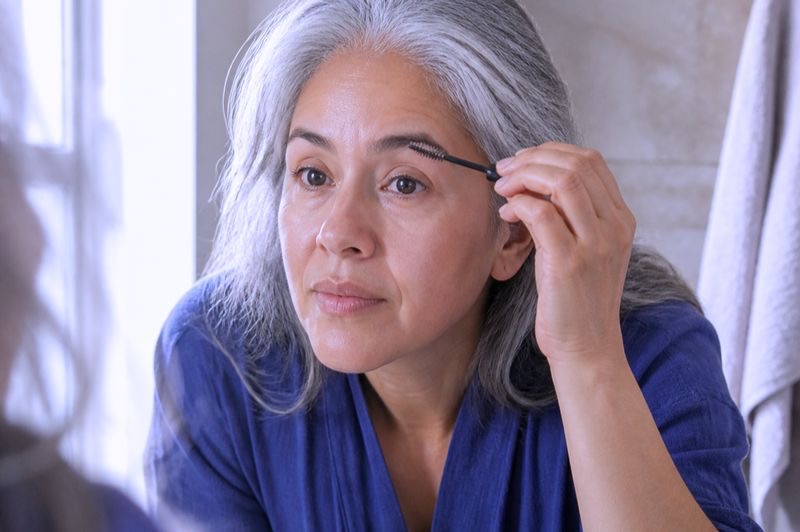
One morning you look in the mirror and the tails of your eyebrows have quietly packed up and left. Eyebrow thinning in menopause is common, and it usually comes from aging and the hormonal shift of menopause together, though researchers still can’t fully explain why brows thin with age. Thyroid problems, low iron, years of plucking and a scarring condition called frontal fibrosing alopecia can also play a part. See a doctor if your brows are thinning fast or in patches, treat them gently, and use a brow powder or pencil to fill gaps in the meantime.
If you’re here for products, we’ve covered the best brow pencil for grey brows separately. This one is about the why: what’s behind thinning brows, which causes need a doctor’s eyes, and what you can realistically expect to grow back. Your brows have framed every expression you’ve ever made, side-eye included. They deserve a real answer.
Why Do Eyebrows Thin During Menopause?
Age is the biggest factor. A clinical review of eyebrow and eyelash hair loss notes that brows and lashes can thin and whiten as part of ordinary aging, and that the reasons behind these changes are still unclear. Follicles make finer hairs over time, and some clock out altogether.
Hormones likely pile on. Estrogen supports hair growth and fullness, and as it drops, hair often gets thinner and sheds more. Most of that research looks at the scalp, not brows, so menopause probably contributes, but no one can tell you exactly how much. We cover the scalp side in hair loss after 50.
Because aging and menopause arrive together, it’s often impossible to tell them apart. What matters more is ruling out the causes you can actually treat.
Can Thyroid Problems Cause Eyebrow Thinning?
Yes. An underactive thyroid can thin hair all over your body, and it’s classically linked to losing the outer third of the eyebrow, the tail that points toward your ear. Doctors sometimes call this the sign of Hertoghe or the Queen Anne sign.
Treat it as a clue. A 2022 case report in the Canadian Medical Association Journal calls it an uncommon finding in hypothyroidism that also shows up with other conditions, including eczema. Losing your brow tails doesn’t automatically mean your thyroid is the culprit, but it’s worth checking, especially if you’re also dealing with fatigue, weight gain, feeling cold, dry skin or constipation. A simple blood test can tell you.
What Is Frontal Fibrosing Alopecia?
Frontal fibrosing alopecia is a form of scarring hair loss that mostly affects women after menopause. It usually makes the hairline at the front and sides of the scalp creep backward, and Cleveland Clinic notes that eyebrow loss affects 80% to 90% of women who have it and can start before any hair loss on the scalp.
This is the one to catch early. Because it scars the follicles, hair lost to it usually doesn’t grow back, and treatment focuses on slowing further loss. The sooner treatment starts, the more hair you’re likely to keep. If your brows are disappearing and your hairline seems to be on the move, skip the wait-and-see and book a dermatologist.
Can Low Iron or Protein Affect Your Brows?
Possibly. The link between iron and hair loss has been debated for years. A review by Cleveland Clinic dermatologists found the evidence mixed, but noted that their clinic screens people with hair loss for iron deficiency anyway, because treating it seems to help. After menopause, low iron is less common, and when it does turn up, the review notes the usual causes are blood loss in the digestive tract or poor absorption. In other words, if your iron is low, your brows are the least important reason to find out why.
Protein plays a part too, since hair is built mostly from a protein called keratin. Most women get enough, but very low intakes during dieting or illness can contribute to shedding (link to “How Much Protein Do Women Over 50 Need to Protect Muscle and Manage Menopause Weight?” once that post is live).
Does Over-Plucking Cause Permanent Thinning?
It can. Plucking, waxing, and threading pull hair out by the root, and over many years that trauma can damage follicles so some hairs grow back finer or not at all. If you were faithful to the pencil-thin brows of another decade, you may be seeing the bill now.
If your brows thinned in exactly the spots you used to pluck, that’s a strong clue.
Will Your Eyebrows Grow Back?
Sometimes, and it depends on the cause. A 2026 dermatology review described the non-scarring causes of eyebrow loss, which include thyroid disease, nutritional deficiencies, and some skin conditions, as a wide range of reversible causes. Treat the underlying problem, and brows can partly or fully come back.
Results are slower and less certain when the cause is age, years of plucking or frontal fibrosing alopecia. A dermatologist can tell you which camp you’re in and talk you through prescription options if they make sense for you. Be skeptical of growth serums sold online, since the evidence behind most of them is thin.
What Helps in the Meantime?
Put down the tweezers. Leave sparse areas alone, and tidy only true strays well away from the brow line.
Go gentle. Take makeup off with a soft touch and an oil-based or micellar cleanser instead of scrubbing.
Fill the gaps. A brow powder, a fine pencil in a matching shade, or a tinted brow gel brings back shape in seconds. If your brows are going grey, our guide to the best brow pencil for grey brows walks you through choosing a shade and four pencils worth trying.
Consider a tint. A professional brow tint darkens fine or pale hairs so they show up again. If your skin is sensitive, ask for a patch test first.
Keep the rest of your makeup soft too. Beauty expert Elise Marquam-Jahns shares the products she’s actually tested on mature skin, makeup that works for mature skin, and the best makeup for mature skin.
When Do Thinning Eyebrows Need a Doctor?
Book an appointment if your brows are thinning fast or in patches, if your hairline is changing too, if the skin on your scalp or brows is red, itchy, or scaly, or if you have other signs of a thyroid problem. Ask for a thyroid test and a ferritin test to check your iron stores, and ask for a dermatology referral if frontal fibrosing alopecia is on the table.
Pharmacist Lisa King makes the case for asking more questions in 5 things I wish my doctor told me about menopause. If you’re weighing hormone therapy for other symptoms, Kate Wells clears up some long-standing fears in breaking the estrogen myth. And for the everyday habits that carry you through this stage, see menopause lifestyle changes that work.
Frequently Asked Questions
Is Eyebrow Thinning Normal in Menopause?
It’s common. Brows can thin and whiten with age, and the hormonal changes of menopause likely add to it, the same way hair elsewhere on your body can thin. Sudden or patchy loss is worth checking with a doctor.
Can Thyroid Problems Cause It?
Yes. An underactive thyroid can thin hair across your body, and losing the outer third of the brow is a classic sign. It isn’t specific to thyroid disease, so ask your doctor for a blood test instead of guessing.
Will My Eyebrows Grow Back?
Sometimes, especially if the cause is treatable, like a thyroid problem or low iron. Regrowth is less likely after years of over-plucking, and hair lost to frontal fibrosing alopecia usually doesn’t return, so an early diagnosis matters.
What Helps in the Meantime?
Stop over-plucking, treat your brows gently, and use brow powder, a pencil or gentle tinting to fill gaps. A dermatologist can talk through treatment options if thinning continues.
Thinning brows are usually just part of getting older, but the cause is worth knowing. Once you know it, what you fill in is up to you.
Disclaimer: This article is for informational and educational purposes only and is not intended as medical, dermatological, or mental health advice. Individual health needs vary. Always consult a qualified healthcare professional before making changes to your health, skincare, supplements, or wellness routine.