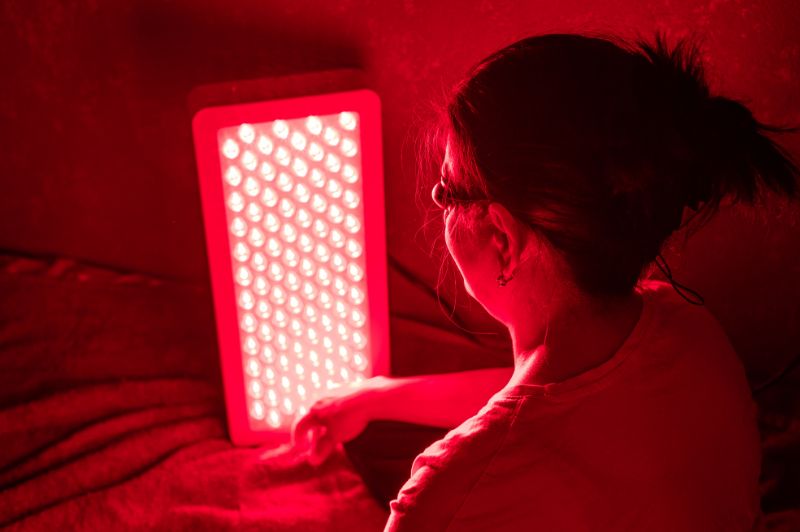
Red light masks are all over social media right now. Women post selfies wearing them, glowing red like something out of a sci-fi movie, and the devices cost about what you’d spend on a weekend away. If one has been sitting in your cart for a week, this is what dermatologists and the research say about red light therapy after 50. We’ll leave the decision to you.
First, What Menopause Changed
If your skin feels different than it did at 45, you’re right about that. The American Academy of Dermatology reports that women’s skin loses about 30% of its collagen during the first five years of menopause, and roughly 2% a year for the 20 years after that. Less estrogen also means thinner skin that holds less water, which is why the moisturizer you swore by for a decade may suddenly seem to disappear by lunch.
You don’t owe anyone a smoother face. Wanting to try something for your skin is reason enough, and so is curiosity. Either way, you’ll make a better call with the real numbers than with a product page.

What the Light Does
These devices shine low-level red and near-infrared light onto the skin. According to Cleveland Clinic, the wavelength controls how deep the light goes, and that varies quite a bit from one device to another.
The evidence on results is mixed, though not bad. The American Academy of Dermatology says some studies show red light LED devices “can produce subtle to noticeable results on the face.” A Harvard dermatologist told Harvard Health there is “legitimate medical literature supporting it,” but said you’d need to use a device multiple times a week for four to six months to see anything.
Subtle, in other words, and slow. If you were hoping to see a difference by a wedding next month, you probably won’t.
The Fine Print
The AAD doesn’t call this a one-and-done treatment. Results take time, and some people use these devices faithfully and never see a change.
Home devices are also weaker than the machines in a dermatologist’s office. Harvard Health notes that their strength varies, so it’s hard to know what dose you’re getting at home.
Then there’s what we don’t know yet. Cleveland Clinic says red light appears safe in the short term when used as directed, but nobody has long-term safety data, and there isn’t enough evidence to back most of the uses being marketed right now. So when a listing promises more energy or faster recovery after the gym, take that with a large grain of salt.
One more thing about the “FDA cleared” sticker on the box. The AAD explains that clearance only means the device is considered low risk. It doesn’t mean anyone proved it works.
5 Questions to Ask Before Trying Red Light Therapy After 50
A few things worth thinking through first:
- Do you have lupus or another condition that makes you sensitive to light? Are you on a medication that does? The AAD says red light may not be a good idea for you, so check with your doctor.
- Darker skin tones can be more prone to dark spots from visible light. The Harvard dermatologist suggests starting at a lower dose, and it’s smart to see a dermatologist before you begin.
- Several sessions a week, for months. Will you really do that? Plenty of these masks end up in a drawer.
- Check that the device lists its wavelengths and comes with goggles. The AAD wants you wearing them every session, and your sunglasses won’t do the job.
- In-office treatment costs more per visit, but the equipment is stronger and someone trained controls the dose. Price both before you decide.
If you still want one, compare a few at-home red light therapy devices before you commit. The good ones tell you their wavelengths, how much area the panel covers, and how long a session runs. A company that won’t share those numbers has given you your answer.
If You Buy One
Tie your sessions to something you already do every day, like right after your evening shower or while the coffee brews, and you’re far more likely to stick with it. Use it on clean skin, and follow the manufacturer’s time limits. Going longer won’t get you results any faster.
Wear the goggles every time. And if your skin gets irritated and stays that way, stop and see a dermatologist.
Last thing. Red light is an add-on, not a replacement for sunscreen and a decent moisturizer. If your routine could use a reset, our simple skincare routine for women over 50 walks you through the basics.
Disclaimer: This article is for informational purposes only and is not medical advice. Talk with a dermatologist or your healthcare provider before starting any new skin treatment, especially if you have a medical condition or take prescription medication. Individual results with red light therapy vary.
Did you enjoy this contributed article? This post contains affiliate links. Sign-up for our Sunday newsletter and get your expert content delivered straight to your inbox.