No one mentions that the strength you’ve taken for granted starts slipping in midlife, or that breakfast is one of the easiest places to protect it. When it comes to how much protein women over 50 need, many experts suggest about 1.0 to 1.2 grams per kilogram of body weight a day, more than the 0.8 g/kg minimum, to help protect muscle that declines with age and menopause. For a 150-pound woman, that’s roughly 68 to 82 grams a day. Spread it across your meals at about 25 to 30 grams each, and check with your doctor first if you have kidney disease.
Protein used to sound like something for guys with shaker bottles. After 50, it’s one of the simplest ways to hold on to your strength and balance, and plenty of women eat very little of it before lunch. Nobody’s talking about getting bulky here. Think carrying your own suitcase and getting up off the floor without a negotiation.
Why Does Protein Matter More After 50?
Muscle is the reason. You start losing it gradually in your 30s, and menopause hits the accelerator. A study that followed women in the long-running SWAN cohort through menopause found that at the start of the menopause transition, lean mass began to decline and the rate of fat gain doubled, with both changes continuing until about two years after the final period.
That’s about more than how your clothes fit. Muscle keeps you strong enough to haul groceries, take the stairs two at a time if you feel like it, and catch yourself when you trip. It works hand in hand with your bones, too. Annie Gaudreault explains why bone health deserves your attention in why tracking bone density after menopause could save your independence.
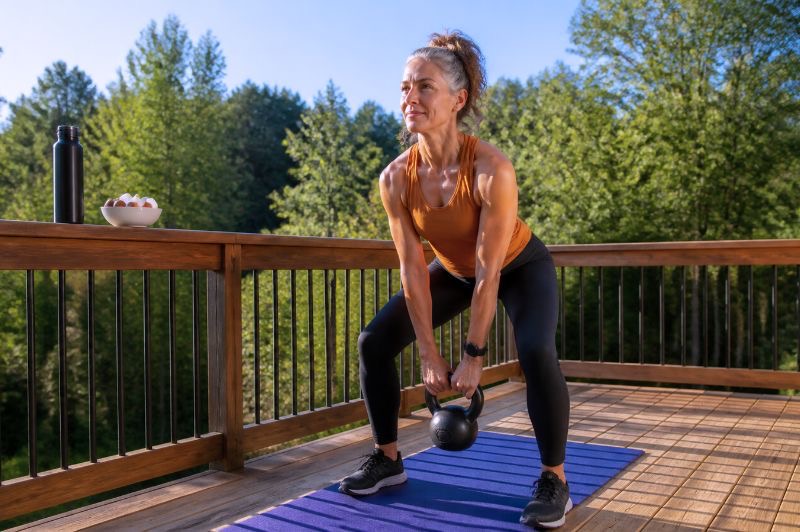
Protein supplies the building blocks your body uses to repair and keep muscle. On its own it won’t stop muscle loss, but paired with strength training, it’s one of the most reliable tools you’ve got.
How Much Protein Do Women Need After 50 Each Day?
The official recommended dietary allowance for adults is 0.8 grams of protein per kilogram of body weight. That’s the floor to avoid deficiency. It was never meant as a plan for staying strong as you age.
An international expert group called PROT-AGE reviewed the evidence and recommended that healthy older adults eat at least 1.0 to 1.2 g/kg a day, with 1.2 g/kg or more if you exercise regularly. Their recommendation was written for adults over 65. Since muscle loss speeds up during the menopause transition, many dietitians use the same range for women from their 50s on, and we think that’s a smart place to aim.
To find your own number, divide your weight in pounds by 2.2 to get kilograms, then multiply by 1.0 and by 1.2. Here’s what that looks like:
- 130 pounds: about 59 to 71 grams a day
- 150 pounds: about 68 to 82 grams a day
- 170 pounds: about 77 to 93 grams a day
If you lift or you’re very active, aim for the higher end.
How Much Protein Do You Need Per Meal?
About 25 to 30 grams at each meal is a common target. A review by researchers at the University of Texas Medical Branch found that about 25 to 30 grams of high-quality protein per meal gives muscle building its strongest boost in both younger and older adults, while meals with less than about 20 grams produced a weaker response in older adults.
That’s why the timing matters. A lot of us eat toast and coffee for breakfast, a decent lunch, and most of our protein at dinner. Moving some of it to the morning is often the easiest win. If you need ideas, our guide to a protein breakfast for midlife women has three quick recipes that hit 30 grams.
What Are Good Sources of Protein?
You don’t need to live on shakes. These everyday foods add up fast (amounts are approximate):
- Eggs: about 6 grams each
- Plain Greek yogurt: about 20 grams in a 7-ounce container
- Cottage cheese: about 25 grams per cup
- Chicken breast: about 25 grams in 3 ounces, cooked
- Salmon or other fish: about 19 to 22 grams in 3 ounces, cooked
- Canned tuna: about 20 grams in 3 ounces
- Firm tofu: about 10 to 20 grams in half a cup, depending on the brand
- Lentils: about 18 grams per cooked cup
- Beans and chickpeas: about 12 to 15 grams per cooked cup
Plant protein counts. If you eat mostly plants, mix beans, lentils, tofu, nuts, seeds and whole grains through the day, and lean toward the higher end of your range. A protein powder can bail you out on a busy day, but let food do the heavy lifting.
How Does Protein Help You Manage Menopause Weight?
Two ways. It tends to keep you fuller than the same calories from refined carbs, so the 3 p.m. pantry raid loses some of its pull. And by protecting your muscle, it helps protect your metabolism, since muscle burns more energy than fat, even when you’re sitting still.
It works best as part of the bigger picture. Strength training two or three times a week gives your muscles a reason to use the protein you eat, and Karen Viesta shares practical steps in banish belly fat in midlife. Sleep matters as well, as Dr. Barbara L Katz explains in the role of sleep in weight loss after 50. For why fat shifts to your middle, see hormonal belly fat after 50 and the food side of the story (link to “Menopause Weight Gain and Inflammation: What to Eat to Calm Both” once that post is live). Our guide to menopause lifestyle changes that work pulls the daily habits together.
Protein backs up your hair, too, since hair is built mostly from a protein called keratin. Very low intakes can contribute to shedding, one more reason to keep your meals balanced (link to “Why Eyebrows Thin in Menopause and What Actually Helps” once that post is live).
Can You Eat Too Much Protein?
You can overdo it, in the sense that more isn’t better. Going way past your range doesn’t build bonus muscle, and the extra calories still count. Once you’re at about 25 to 30 grams in a meal, piling on more adds little for your muscles.
Kidney health is the big exception to the higher targets. PROT-AGE noted that people with severe kidney disease who aren’t on dialysis may need to limit protein. If you have kidney disease, diabetes affecting your kidneys or any other kidney concern, talk to your doctor before you increase your intake.
Frequently Asked Questions
Why Does Protein Matter More After 50?
Muscle loss speeds up with age and during the menopause transition. Eating enough protein, especially alongside strength training, helps you keep the muscle behind your strength, balance, metabolism and independence.
How Much Per Meal?
About 25 to 30 grams at each meal is a common target. Research suggests that amount best supports muscle in older adults, while meals with less than about 20 grams produce a weaker response.
What Are Good Sources?
Eggs, fish, poultry, Greek yogurt, cottage cheese, tofu and legumes such as lentils and beans. Plant and animal proteins both count, and a protein powder can fill gaps on busy days.
Is More Protein Always Better?
No. Eating far beyond your needs doesn’t build more muscle and adds calories. People with kidney conditions need to check with their doctor before increasing protein.
For women over 50, protein is less a diet trend than a way to stay strong enough to do what you want for decades, and breakfast is the easiest place to start.
Disclaimer: This article is for informational and educational purposes only and is not intended as medical, dermatological, or mental health advice. Individual health needs vary. Always consult a qualified healthcare professional before making changes to your health, skincare, supplements, or wellness routine.