Food safety for older adults isn’t paranoia; it’s a smart, midlife upgrade that protects your body (and the people you feed).
Food Safety Isn’t “Someone Else’s Job”: What Frontline Workers Catch Before It Hits Your Plate
If you’re over 50, you already know this truth: your body doesn’t “bounce back” the way it used to.
So when food safety slips, when something contaminated makes it into a salad, a snack, or a “quick dinner” you grabbed because you’re busy, your risk calculus changes. It’s not paranoia. It’s a lived experience.
And here’s the part most consumers don’t think about: the biggest food-safety wins don’t happen in a courtroom, a recall headline, or a press release. They happen quietly, on the front line, when someone notices something “off” and refuses to let it slide.
This article is about those people: the frontline workers who spot issues early, follow protocols under pressure, and protect public health in ways you’ll never see.
The Frontline is Where Food Safety Becomes Real
Food safety is often described as a system: standards, inspections, audits, lab testing, and documentation.
True. But systems don’t run themselves.
Frontline workers are the ones who:
- catch temperature problems before bacteria can multiply
- stop cross-contamination before it becomes an outbreak
- flag damaged packaging, off odors, or visual spoilage
- follow sanitation procedures when nobody is applauding them for it
When it works, you never know it happened. That’s the point.
What Frontline Workers Actually Watch For
Here’s what “food safety” looks like in practice, on the ground.
-
Temperature control (cold chain discipline)
Many pathogens thrive when food sits in the danger zone (roughly 40°F–140°F / 4°C–60°C). Frontline workers monitor:
- delivery temperatures
- refrigeration performance
- time-out-of-temp during prep or staging
- hot-holding temps in service environments
If a cooler is running warm, that’s not “a maintenance issue.” That’s a food-safety event.
-
Cross-contamination (the invisible hazard)
This is where sloppiness becomes dangerous:
- raw proteins near ready-to-eat foods
- shared cutting boards or knives
- gloved hands touching multiple surfaces
- “quick rinses” instead of proper sanitizing
Frontline workers who follow protocol are often the last line between “minor mistake” and “major illness.”
-
Visual + sensory red flags
Food doesn’t always come with a warning label. Workers are trained to look for:
- unexpected discoloration
- slimy texture
- broken seals
- swelling cans or compromised packaging
- off smells (especially in ready-to-eat items)
These signals aren’t “preferences.” They can indicate spoilage or unsafe handling.
-
Sanitation routines (the unsexy backbone of safety)
Sanitation isn’t just “clean.” It’s controlled, documented, repeatable.
For people who want to see how regulators think about this at an industry level, the FDA has detailed guidance on sanitation programs, including how facilities should build and verify routine sanitation practices.
Even if you’re not in food manufacturing, it’s a helpful reminder: safety is built through habits, not hope.
Why Food Safety For Older Adults Hits Different After 50
Let’s make this personal, because on Kuel Life, it always is.
If you’re in midlife, you may be:
- feeding grandkids or aging parents
- managing autoimmune issues, diabetes, or gut sensitivity
- recovering more slowly from illness
- simply less willing to “roll the dice” with food that seems questionable
Foodborne illness can hit anyone, but the consequences can be more serious for older adults and people with underlying conditions. The goal isn’t fear. It’s smart prevention.
The Recall Reality: Headlines Are Loud, Systems Are Quiet
Recalls and public statements are part of the ecosystem, but they’re not the whole story.
Sometimes, what people casually call a “recall” is actually a company statement tied to an investigation or outbreak update, without a formal product recall being initiated. For example, Taylor Farms recall was published as a public romaine statement during the 2018 E. coli outbreak update period, often referenced online as a “recall” moment.
The takeaway for readers: don’t rely on viral phrasing. Rely on verified updates from the company and public health agencies when you’re making decisions.
What You Can Do At Home (without turning into a detective)
Frontline workers do their part. You can do yours, without spiraling.
Here are consumer-level habits that matter:
-
Respect your fridge
If your fridge is inconsistent, stuffed to the gills, or you can’t remember the last time you cleaned it… that’s not “quirky.” It’s a risk amplifier. -
Wash hands like you mean it
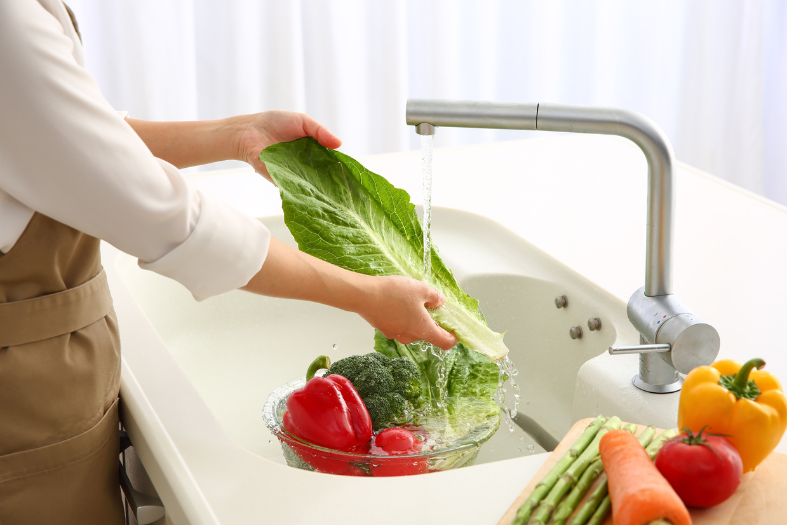
Before and after food prep. After handling packages. After touching your phone (yes, your phone). -
Separate raw and ready-to-eat
Different cutting boards, different utensils, different zones. “But I rinsed it” is not a strategy. -
Don’t keep “maybe” foods
If you’re asking yourself, “Is this still okay?” your body is not in the mood for your optimism. -
Start with small, sustainable upgrades
If “eat healthier” is your 2026 mantra, the best changes are the ones you’ll actually maintain. Kuel Life has a simple, realistic guide in our 7 Healthy Food Swaps For A Healthier You, Small Changes Big Impact.
The Unsung Truth: Food Safety is A Culture, Not A Checklist
Frontline workers operate inside a culture. When leadership values speed over safety, workers feel it. When training is weak, corners get cut. When reporting issues is punished, problems stay hidden.
The safest operations tend to share three traits:
- clear, repeatable procedures (not vague “be careful” advice)
- training that treats workers like professionals
- psychological safety to report issues without retaliation
If you’ve ever worked a job where you were told to “just make it work,” you already understand how safety can erode under pressure.
Bottom Line
Food safety isn’t a marketing claim. It’s the daily discipline of people doing the right thing when it would be easier not to.
Frontline workers protect us most when:
- they’re trained
- they’re supported
- they’re empowered to stop the line when something feels wrong
And for those of us over 50? That invisible protection matters. Because we’ve got better things to do than spend a week recovering from something that should have been prevented.
Disclaimer: This article is for informational purposes only and does not provide medical or legal advice. If you think you may have a foodborne illness or severe symptoms, seek medical care promptly and follow guidance from your local public health authorities.
Did you enjoy this contributed article? This post contains affiliate links. Sign-up for our Sunday newsletter and get your expert content delivered straight to your inbox.