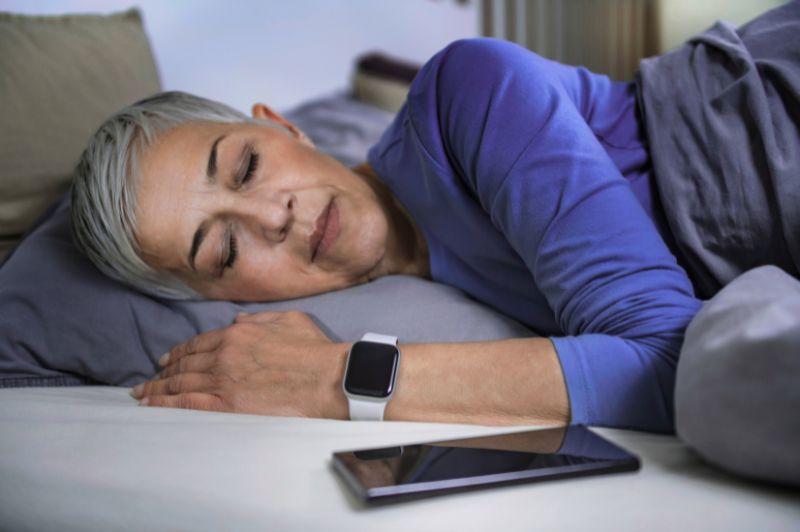
A sleep tracker can help you connect the dots between sleep consistency and the energy you feel in your 50s.
“Biohacking” in your 50s can sometimes feel like you need to buy something shiny and hope it fixes what stress, hormones, sleep debt, and a packed life are actually doing to you.
However, there is one gadget that can help boost your energy, as long as you use it as a tool, not a truth machine.
It is a wearable tracker. Not because it magically makes you healthier, but because it can show you patterns you keep missing when you are busy powering through.
This is not about chasing perfect scores. This is about getting your energy back with fewer guesses and less self-delusion.
The One Gadget That Helps in Your 50s
A wearable can be useful if it does three things:
- Helps you notice what drains you before you crash.
- Helps you build consistency without overthinking it.
- Helps you connect cause and effect in your own body.
What a Wearable is Actually Food For
Wearables are best at showing trends, not diagnosing problems. Think:
- Your sleep consistency over time.
- Your resting heart rate trend.
- How much you move on an average day.
- Whether your body is recovering or running hot.
Used well, it becomes a mirror. Used poorly, it becomes a tiny wrist-based judge that makes you anxious.
The Three Sleep Tracker Metrics That Matter for Energy
If you track everything, you will change nothing. In midlife, simpler wins.
1) Sleep Consistency, Not Just Sleep Duration
Eight hours once does not fix five nights of chaos. The energy win is rhythm.
Look at:
- What time do you go to sleep most nights?
- What time do you wake up most mornings?
- How often is your sleep interrupted?
If your wearable shows constant fragmentation, that is information. It is not a personal failure.
2) Resting Heart Rate Trend
A single number does not matter. The direction does.
If your resting heart rate is creeping upward over weeks, your body may be under more stress than you think. That stress can be physical, emotional, hormonal, or all of the above.
3) Movement Consistency
You do not need an aggressive step goal. You need a baseline you can repeat.
Many women in midlife feel “tired all the time” partly because their movement gets squeezed out by work and life, and then their body adapts to less capacity. The fix is not punishment. It is consistency.
How to Use the Data Without Becoming Obsessed
If you tend toward perfectionism, wearables can backfire. The goal is clarity and follow-through, not self-criticism.
Do this:
- Check trends once a day, not ten.
- Pick one small change for two weeks.
- Use the data to adjust your routine, not to judge yourself.
- Notice what improves your energy and what drains it.
Do not do this:
- Panic over one bad night of sleep.
- Try to hack your body into constant peak performance.
- Chase HRV like it is a stock price.
- Override your real-life fatigue because your watch says you are fine.
Your body still gets a vote.
A Simple Two-Week Energy Reset Using Your Wearable
This is the part most “biohacking” content skips. You do not need more information. You need a plan you can actually do.
Week 1: Make Mornings Predictable
Pick a morning routine that is realistic, not aspirational. Your wearable will help you see whether it is helping.
You can start with this Kuel Life guide, How To Create A Midlife Morning Routine That Supports Energy And Calm, and make it your own:
Track:
- Wake time consistency
- Morning light exposure or movement
- Caffeine timing
- How you feel by mid-morning
Goal:
More steady energy, fewer crashes, less reliance on stimulants to feel human.
Week 2: Protect Your Sleep Inputs
Energy starts the night before. Your wearable can tell you what is wrecking your sleep, but you have to be willing to change the inputs.
Try:
- Stop caffeine earlier than you want to.
- Reduce alcohol close to bedtime.
- Put your phone down earlier.
- Create a wind-down routine that does not feel like a chore.
Also, one underrated energy factor is sensory stress. Constant loud environments drain you. Poor hearing support can drain you. And seasonal changes can sneak up on you when routines shift.
If you want a practical, specific guide, here are solid fall hearing protection tips.
Track:
- Sleep interruptions
- Total sleep time
- How you feel when you wake up
Goal:
Fewer wake-ups, better recovery, more stable mood.
The Real Point of a Wearable in Your 50s
The wearable is not the solution. It is the flashlight.
It helps you stop pretending your body runs on willpower. It helps you see patterns. And it gives you feedback fast enough to make smarter choices without turning wellness into a second job.
If you use it to build consistency, it can absolutely help your energy. If you use it to chase perfection, it will make you tired in a whole new way.
Disclaimer: This article is for general informational purposes only and is not medical advice. Wearable devices are not diagnostic tools and should not be used to diagnose or treat any health condition. If you have persistent fatigue, sleep problems, dizziness, heart symptoms, hearing concerns, or any new or worsening symptoms, consult a qualified healthcare professional.
Did you enjoy this contributed article? This post contains affiliate links. Sign-up for our Sunday newsletter and get your expert content delivered straight to your inbox.