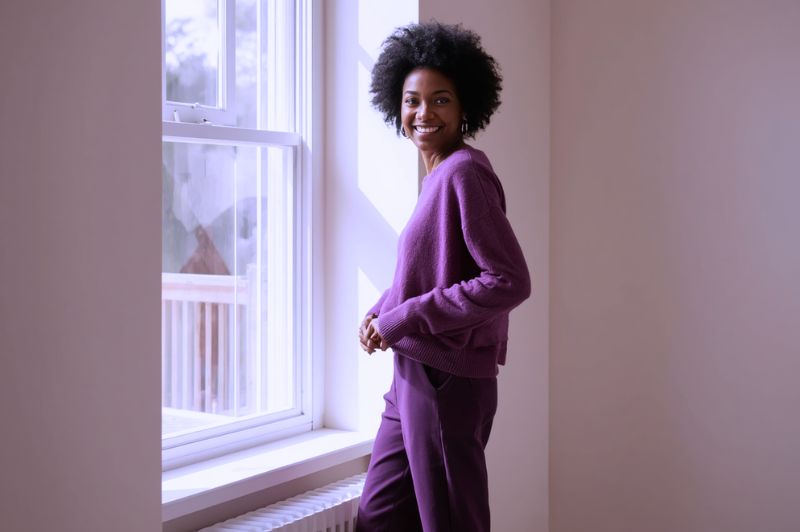
Comfortable clothing for midlife women has always been sold as one of two things: a treat you earn on the weekend, or a surrender you make once you’ve stopped caring.
Neither one is true. By midlife, most of us have figured that out the hard way, usually in a dressing room, fighting a waistband that used to fit and wondering when getting dressed turned into a negotiation.
Here’s the reframe. Comfort isn’t the consolation prize you settle for when you’ve given up on style. It’s the version of dressing that finally works with the body and the life you actually have, instead of the one you used to have, or the one some ad campaign decided you should want. Call it sovereignty dressing. You’re not asking permission from your clothes anymore. You’re setting the terms.
Your Body Changed, and That’s Not a Failure
Somewhere along the way, women get told that a changing body is a personal failing, something to apologize for or quietly correct. It isn’t. Body composition changes during the menopause transition are well documented in clinical research, not just anecdotal. A 2021 review in the Journal of Mid-life Health lays out exactly how fat distribution, muscle mass, and overall shape shift during this window, independent of what you eat or how hard you work out. The research is clear that this is biology, not a discipline problem.
It’s not only shape, either. Temperature regulation shifts, joints feel things they didn’t used to, and skin sensitivity changes what fabric can sit against it all day without irritation. Waistbands that were fine at thirty-five can feel like a punishment at fifty-five, and that has nothing to do with willpower.
That distinction matters, because most style advice still treats a changed body like a mistake to correct instead of a fact to dress around. If you want the deeper version of that reset, we’ve written about rebuilding body confidence after 50 as an act of self-respect, not vanity.
What You Wear Isn’t Neutral
Clothes aren’t just fabric. Psychologists have spent years studying what’s called enclothed cognition, the idea that what you put on your body changes how you think and carry yourself. The original research found that clothing can shift focus, posture, and confidence. Later studies have pushed back on how consistent that effect really is, and that’s a fair caveat. But most women don’t need a peer-reviewed paper to confirm what they already know from wearing shoes that pinch through an eight-hour day, or a blazer that pulls every time you reach for something.
Think about the difference between sitting through a long meeting in stiff denim versus a soft-stretch trouser. Or catching a flight in structured pieces that need constant adjusting versus something that lets you sleep on the plane and still look put together at baggage claim. A waistband that digs in isn’t neutral. It’s a tax you pay all day long, on your focus and your mood both.
The Data on Feeling Good in Your Clothes
This isn’t just a feeling, either. A 2026 study on middle-aged women specifically found a direct link between satisfaction with clothing choices and overall well-being, including social confidence. The findings back up something Kuel Life readers have been saying for years: dressing for the body and life you have now isn’t vanity. It’s maintenance for your actual mental state.
What Comfortable Clothing for Midlife Women Actually Looks Like
Sovereignty dressing isn’t a uniform, and it isn’t a rulebook. It’s a set of decisions that put you back in charge of your own wardrobe instead of a size tag or a decade-old silhouette. That starts with fabric. Cotton, modal, cashmere, and stretch-infused blends do real work here, softening the experience of getting dressed without looking like you gave up.
It also means rethinking what “polished” even means. A cozy oversized sweater with straight-leg jeans and simple jewelry reads pulled together, not lazy. Sneakers look sharp next to tailored pieces when they’re clean and intentional. Pieces like SKIMS joggers prove that comfort-first clothing can still feel current and put-together, not like a retreat from style.
Build for transitions, too. A soft knit dress that works with sneakers during the day and boots at night. Stretch trousers that move from a work call to dinner without a costume change in between. The fewer times you have to change clothes to match a mood the world assigns you, the more time and energy you get back.
And prioritize fit over the number on the tag. A garment that moves with you, that you don’t have to adjust every ten minutes, does more for how you carry yourself than anything cut two sizes smaller ever will. Tailoring a comfortable piece to actually fit your body beats buying a smaller size and hoping.
The Real Win
This isn’t about dressing down or disappearing into loungewear forever. It’s about refusing to keep negotiating with clothes that were never built for the body or the life you actually have. Comfort, done right, isn’t where style goes to die. It’s where it finally gets honest, and where you stop performing for an audience that was never paying that much attention anyway.
Did you enjoy this contributed article? This post contains affiliate links. Sign-up for our Sunday newsletter and get your expert content delivered straight to your inbox.