Menopause Matters: Kate Wells
The menopause care gap is not a supply chain problem. It’s a values problem, and the estrogen patch shortage is just the latest proof.
Jack’s recent article on the shortage in estrogen patches names something real and important, and honestly, it’s past time we said it out loud.
The estrogen patch shortage is a supply chain story, yes. But it’s also a values story. When a medication becomes scarce, we find out pretty quickly what a healthcare system decided was worth protecting. And for women seeking hormone replacement therapy, the answer for decades has been: not much.
How the Menopause Care Gap Got Built
The Training Problem Nobody Fixed
Let’s start with the training gap, because it underlies everything else. The average physician receives only a few hours of education on menopause across their entire medical training. Not days, just a few hours.
Many practitioners finish residency unable to distinguish perimenopause from anxiety or depression, unable to sit with a 47-year-old woman and have an honest conversation about what the next decade of her physiology might actually look like. This isn’t a character flaw in individual clinicians. It’s a structural failure. You cannot teach what the curriculum doesn’t include. It’s astounding to me how many practitioners think hormone replacement is all about estrogen, no mention of progesterone or other hormones. Such thinking misses a significant area of hormone physiology that contributes further to the gap in women’s care.
For a deeper look at how this plays out in clinical practice, this landmark review from Yale School of Medicine covers exactly how long the knowledge gap has gone unaddressed — and what it actually costs women.
The WHI Study and Its Long Shadow
Then came the Women’s Health Initiative.
The WHI study, published in 2002, sent shockwaves through medicine and through the lives of millions of women who were abruptly taken off hormones by frightened physicians. The finding suggested a link between hormone therapy and breast cancer and cardiovascular disease, and the interpretation calcified into something far more sweeping than the data supported.
What got buried in the panic: the average participant was 63, more than a decade past menopause onset. Many had pre-existing cardiovascular risk factors. The formulation used was conjugated equine estrogen combined with a synthetic progestogen, not the full range of bioidentical hormone therapies available. The absolute risk increase was small. And subsequent re-analysis suggested that for women who begin hormone therapy closer to menopause, the risk picture looks quite different, and in some cases, actually protective.
None of that nuance made the headlines. The headline was: hormones cause cancer. Women stopped asking. Doctors stopped prescribing. A generation of women was undertreated, often for a decade or more, during the years when hormone supplementation might have mattered most. If you are interested in reading more about this situation, I highly recommend the first chapter of Blind Spots: When Medicine Gets It Wrong by Marty Makary.
The Research That Was Never Funded
What makes this even harder to untangle is that bioidentical hormones remain almost entirely unstudied in large, rigorous clinical trials. The research infrastructure simply wasn’t built. Pharmaceutical companies have limited incentives to fund trials on hormones that can’t be patented in their bioidentical form. Regulatory bodies haven’t compelled the research. And so, practitioners are left making clinical decisions based on inference and extrapolation rather than solid evidence. The absence of data is not neutral; it defaults to caution, and in this case, caution means deprivation and deficiency.
What Three Decades of Neglect Looks Like
There’s also a bigger question that medicine has never adequately asked: what does it mean to help women not just survive menopause, but genuinely thrive for the 30 or 40 years that follow? A woman who reaches menopause at 50 in reasonable health today may live to 85 or 90. That is a long time to spend in a hormonal environment that nobody optimized for, that was never seriously studied with her long-term vitality in mind, and that she was largely told to endure.
The clinical conversation is still framed around symptom management — hot flashes, sleep disruption, mood changes — as if the goal is simply to get through it. The deeper questions about bone density, cardiovascular health, cognitive function, and quality of life across decades rarely get the same serious attention.
It’s hard not to notice the contrast. Viagra arrived in 1998 and was embraced as a near-miraculous quality-of-life intervention for men. It was researched, approved, prescribed, celebrated, and eventually made widely accessible and affordable. Nobody told men to simply accept the changes that came with aging. Nobody suggested they were overreacting or seeking unnecessary treatment. The infrastructure of research, prescription, and cultural permission was built quickly, because the need was taken seriously. Where is that same energy for women navigating one of the most significant biological transitions of their lives? Where is the equivalent investment, the equivalent urgency, the equivalent cultural movement that says: yes, this matters, we need real robust research into women’s health, so let’s fix it?
Why the Menopause Care Gap Is Finally Closing
But here’s what’s actually happening, and this part gives me genuine cause for hope. The tide is turning, and it is women themselves powering the movement.
The surge in demand isn’t a fad or a wellness trend. It’s what happens when a generation of well-informed, determined women finally finds language for what they were denied and starts asking for it loudly enough that the system has to respond. And they are asking! Women are researching. Women are reading the actual studies, parsing the nuance of the WHI data, finding practitioners who are up to speed, and when they can’t find those practitioners, they are finding each other.
The Menopause Care Gap Women Are Closing Themselves
There is a growing and genuinely impressive cohort of women clinicians, researchers, podcasters, writers, coaches, and advocates who are educating other women about their options with a clarity and honesty that has never existed before. They are normalizing these conversations across kitchen tables, group chats, and online communities in ways that are genuinely making change for good. Information that used to require a particularly knowledgeable specialist is now increasingly accessible, and women are using it and sharing it.
And they’re being resourceful about solutions too. When prescriptions are hard to come by, expensive, or caught up in a shortage, women are looking at what else is available to them and finding some genuinely reputable options. There are well-formulated over-the-counter products, from vaginal moisturizers, high quality evidence-informed estriol, progesterone, DHEA creams, and targeted supplements that can meaningfully support optimal body function during this transition. Not every answer has to come from a prescription pad, and increasingly women know that. They’re cross-referencing ingredients, reading research, and making informed decisions about their own bodies in ways that would have seemed extraordinary to previous generations.
If you’re navigating this with your own doctor, Kate’s earlier breakdown of the most common HRT objections — and how to answer them is worth bookmarking before your next appointment.
We’ve Always Built What the Institutions Wouldn’t
This is, frankly, what women have always done. As the Eurythmics sang ” Sisters Are Doin’ It for Themselves”. When formal systems fail us or move too slowly, we work as teams. We share what we know. We pass along the name of the doctor who actually listened, the product that actually helped, the podcast that finally explained what was happening in plain language. We build the support networks that the institutions didn’t build for us. It has always been this way, and it is happening again now: loudly, visibly, and with an energy that the medical establishment would do well to pay attention to.
Women are not asking for anything extraordinary. They were asking to feel well, to function, to have access to care that medicine has long had the tools to provide, but chose not to. It’s a time for women to feel empowered, to be empowered, to claim their awesomeness throughout their lifespan.
Did you enjoy this article? Become a Kuel Life Member today to support our Community. Sign-up for our Sunday newsletter and get your content delivered straight to your inbox.
About the Author:
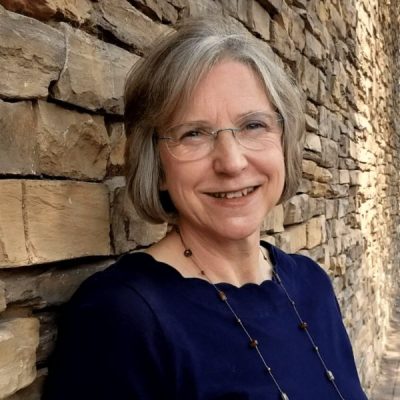
Kate Wells is a hormone expert and true biochem nerd who has been educating practitioners about hormones for many years. Starting out as a High School science teacher, and then pivoting to the business world, Kate new she wanted to combine her passions for science and business and found the perfect match in leadership roles at labs specializing in hormone testing and hormone formulation.
She currently runs her own bioidentical hormone product companies where she writes educational articles and continues to educate practitioners on the role of hormones in optimal longevity. Beyond nerding-out on the latest research, Kate is an avid hiker, regularly putting in 20-mile hikes in the beautiful wilds of Colorado, loves to build stuff, swing dance, and work with fabric to make colorful quilts. Kate is the author of A Forecast for Health and is the CEO and co-founder of Parlor Games LLC. Kate holds a BS, MBA, and has completed a Fellowship in Herbal Medicine.