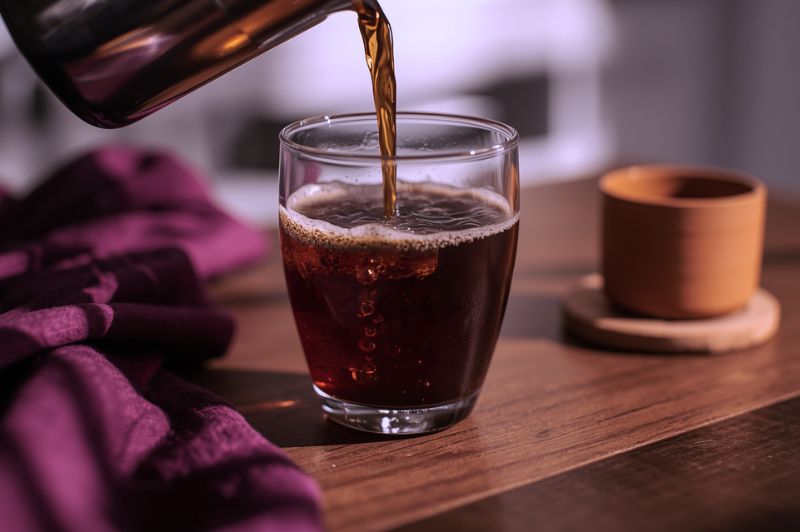
Why does cold brew coffee foam? Because the beans are doing exactly what fresh beans are supposed to do.
You’re pouring cold brew into glasses for the people sitting at your own table, and someone eyes the ring of foam clinging to the rim like you did something wrong. You don’t reach for a spoon to skim it off before anyone notices. You just pour the next glass, because you already know what that foam is, and it isn’t a mistake.
That’s the whole shift, honestly. Somewhere around this age you stop apologizing for things that were never wrong in the first place. Your cold brew doesn’t need defending. It needs an explanation, and for once, a real one.
Why Does Cold Brew Coffee Foam?
The foam is carbon dioxide. When coffee beans are roasted, a chemical reaction traps gas inside their structure. That gas doesn’t sit there forever. It escapes slowly, over days and weeks, and it carries flavor compounds out with it. Grinding the beans speeds the whole process up, because you’ve just multiplied the surface area the gas can escape through.
The bubbles don’t just appear and disappear on their own, either. Oils and proteins the beans release during brewing act like scaffolding, holding a thin skin of gas together for a moment before it pops. That’s the difference between a clean ring of foam and a glass that just looks flat and fizzy.
Here’s the number that actually matters. Coffee loses gas fastest in the first twenty days after roasting, then the rate drops off hard, and once it’s ground, most of that gas is gone within about an hour, according to the Specialty Coffee Association’s breakdown of coffee freshness. So the CO2 fizzing up in your glass isn’t a flaw in your technique. It’s proof the beans were doing exactly what fresh beans do.
Why Cold Brew Shows It and Hot Coffee Hides It
Cold liquid holds onto dissolved gas better than hot liquid does. That’s chemistry, not a coffee quirk. Hot coffee releases most of its CO2 almost immediately, before it ever reaches your cup. Cold brew steeps for twelve to twenty four hours in a sealed container, so the gas has nowhere to go. When you finally open that jar and pour, all of it comes out at once.
Add a little agitation, a splash into the glass, a stir with a spoon, and you’re forcing even more of it out. That’s not overbrewing. That’s cold brew behaving exactly like cold brew.
Reading Your Own Glass Without Asking Anyone
Here’s where this stops being about coffee. You don’t need a barista or your grown kid’s opinion to tell you whether your coffee turned out right. A good ring of foam on whole beans you ground yourself is usually a sign they were fresh. A flat pour with almost nothing on top usually means the beans had been sitting around a while, which happens fast with pre-ground coffee from the store, since it starts losing gas the moment it’s bagged.
That’s a small thing. It’s also the kind of small thing that adds up. Knowing why something in your own life works the way it does, instead of being told not to worry about it, is a habit worth keeping past the coffee.
Setting Your Table on Your Terms
If you’re hosting and you want the glasses to look as good as the coffee tastes, that part is simple. Strain the cold brew through a fine mesh sieve before serving, to remove the particles bubbles cling to. Pour it down the side of the glass instead of straight down the middle. Give it a minute to settle before you add ice. Rinse the glasses well beforehand too, because leftover soap residue will foam things up on its own regardless of what’s in the glass.
None of that is covering for a mistake. It’s what you do when you’re the one deciding how the table looks, right down to custom printed plastic cups wholesale if you want the whole spread to feel intentional instead of thrown together. And if the coffee station itself needs an upgrade before the next brunch, building out your own coffee station properly is worth doing once instead of scrambling every time people come over.
The One Time It’s Actually a Problem
There is a real warning sign in all this, so it’s worth saying plainly. If your cold brew produces foam that’s persistent and smells sour or fermented instead of just fizzy, that’s not fresh CO2 anymore. That’s a batch that sat too long. Cold brew belongs in the fridge for its full steep, twelve to twenty four hours, not on the counter overnight. A little foam means your beans were good. A sour, foamy mess means it’s time to start over, no second-guessing required.
So the next time someone at your table gives that ring of bubbles a second look, you don’t have to explain yourself. You already know what it is. You knew before they asked. That’s the whole point of getting older and paying attention. Fewer things need permission, including your coffee.
Did you enjoy this contributed article? This post contains affiliate links. Sign-up for our Sunday newsletter and get your expert content delivered straight to your inbox.