Pickleball for women over 50 isn’t a trend to try. It’s the sport that keeps showing up on your calendar long after every other fitness phase has quietly died.
Nobody really decides to play pickleball. That’s the thing. You get dragged to a court by a neighbor, or you walk past an open gym session at the rec center, or your doctor mentions it so casually you almost miss it. You pick up a paddle because there’s nothing to lose. And then, a few weeks later, you notice you’ve gone four times and you’re already annoyed when you can’t go a fifth.
That’s not how fitness usually works for women in their 50s. Most exercise programs demand a level of commitment that doesn’t survive the first schedule conflict. Pickleball doesn’t feel like commitment. It feels like something you actually want to do, which turns out to be the most powerful fitness variable there is.
Why Pickleball for Women Over 50 Works at This Life Stage
Here’s what nobody tells you at the start: pickleball rewards the things midlife women have more of, not less. Strategy. Reading the room. Patience. Slowing down instead of muscling through, and actually thinking.
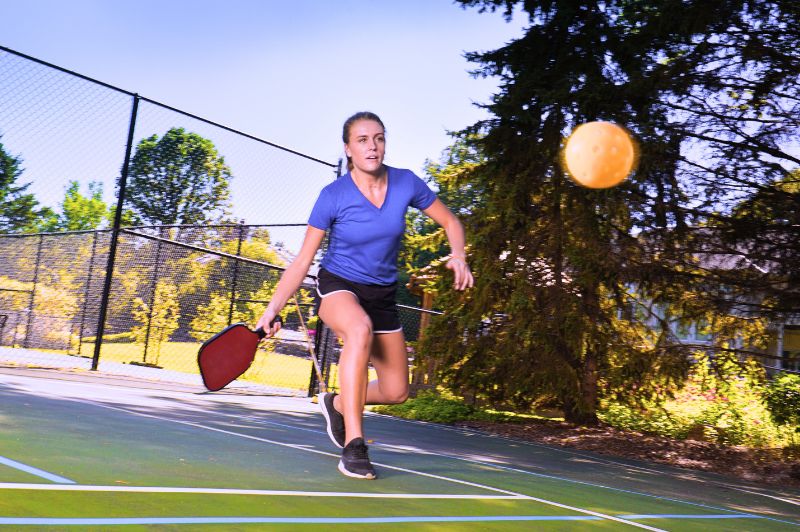
The court is smaller than in tennis, the rallies are built on placement rather than power, and the scoring keeps you mentally present in a way that makes an hour go by in what feels like fifteen minutes. You’re not grinding. You’re competing. That’s a different relationship with your body entirely.
It also happens to be genuinely good for you. A 2024 review of 27 existing studies found that pickleball improves well-being, increases social interaction, and gets people moving more consistently than other recreational activities. A separate study tracking players with an average age of 62 found that heart rates stayed in the moderate to vigorous intensity zone for more than 70 percent of play time. That’s not a gentle walk. That’s a real workout that doesn’t announce itself as one.
The cognitive piece matters too. The strategy, the quick reaction time, the constant reading of your opponent’s position, it all adds up. If you want to know more about what’s happening in your brain during a pickleball game, this piece on 4 reasons pickleball keeps your brain strong is worth your time.
The Women Who Come Back to Sport Through Pickleball
There’s a specific kind of woman on a pickleball court. She’s not necessarily athletic in the way the world usually means that word. She may not have played a sport in twenty years. She might have a knee that gives her trouble, or a shoulder she’s been careful with, or a body she’s spent a complicated decade getting to know again.
But she’s competitive. She has opinions about the game. She wants to get better. And she shows up.
A lot of women in midlife quietly stepped away from recreational sport somewhere in the middle of everything. Careers, kids, caregiving, the sheer volume of other things that needed attention. Sport was the first thing to go. Pickleball is often how they come back. Not as beginners picking up something new. As athletes returning to something they’d just set down for a while. If you’re still looking for the type of movement that actually sticks, 5 Ways to Find Exercise You Enjoy is a useful starting point before you commit to anything.
The re-entry is easier than you’d expect. Doubles is the standard format, which means you’re covering half a court. You can start slow. You can play with people who are also starting slow. Nobody expects you to be good right away, and the culture on most recreational courts is genuinely welcoming in a way that organized sport rarely manages to be.
What Showing Up as an Athlete Actually Looks Like
There’s something worth saying about gear that usually doesn’t get said: what you wear to the court matters, and not for vanity reasons.
Pickleball involves a lot of movement in a small space. You’re reaching, pivoting, lunging forward for dinks, and pushing back for lobs, all in a session that might run an hour or more, sometimes back-to-back. Clothing that restricts shoulder rotation, traps heat, or requires constant adjustment is a legitimate distraction. A breathable pickleball jersey designed for court movement is worth thinking about if you’re playing regularly, because when the gear is right you stop thinking about it entirely and focus on the game.
The same logic applies to shoes. Court shoes, not running shoes. The lateral movement in pickleball is hard on footwear designed for forward motion, and your ankles will notice the difference after a few sessions.
This is what showing up as an athlete looks like. Not performing. Not dressing for a sport you’re not sure you’re allowed to claim yet. Actually gearing up, because you play now, and that’s who you are.
The Social Structure That Keeps You Going
Open play at most courts works on rotation. You play a game, you come off, someone new cycles in, you go back on. It sounds informal, but it means you end up playing with a rotating group of people, week after week, until they’re not strangers anymore. This happens faster than you’d think.
The accountability that usually requires a personal trainer or a gym buddy gets built into the game itself. People are expecting you on the court. There’s someone to text when you can’t make it. There’s a group chat you’ve somehow ended up in. The sport brings its own built in social life, which is why it keeps people coming back in a way that a gym membership almost never does.
For women in midlife who are rebuilding their social lives after kids leave, careers shift, or relationships change, pickleball courts turn out to be surprisingly good places to find people worth knowing. Women who show up to play, who are curious and a little competitive, and who are not especially interested in talking about what they used to be.
What a Sustainable Court Routine Actually Requires
The body at this life stage is not the body that could skip warmups and wing it. That’s not a complaint. It’s just information.
Ten minutes before you play matters. Walking, hip circles, shoulder rolls, a few practice volleys before the first real game. It takes almost nothing and it’s the difference between a good first game and spending the first twenty minutes shaking off stiffness.
Recovery deserves the same honesty. Pickleball is fun enough that it’s easy to play more days in a row than your joints actually want. Soreness that doesn’t clear in a day is information. A shoulder that’s been bothering you for three weeks is not something to push through. The players who are still on the court at 70 are the ones who listened to that stuff in their 50s.
Two short strength sessions a week, focused on hips, glutes, shoulders, and core, make you a more capable player and keep the common pickleball complaints (elbow, knee, shoulder) from becoming recurring ones. Not because you need to train like an athlete. Because you are one, and your body benefits from being treated accordingly.
Did you enjoy this contributed article? This post contains affiliate links. Sign-up for our Sunday newsletter and get your expert content delivered straight to your inbox.